Aras Free Zone, Railways sign agreement to turn Jolfa into a transit hub
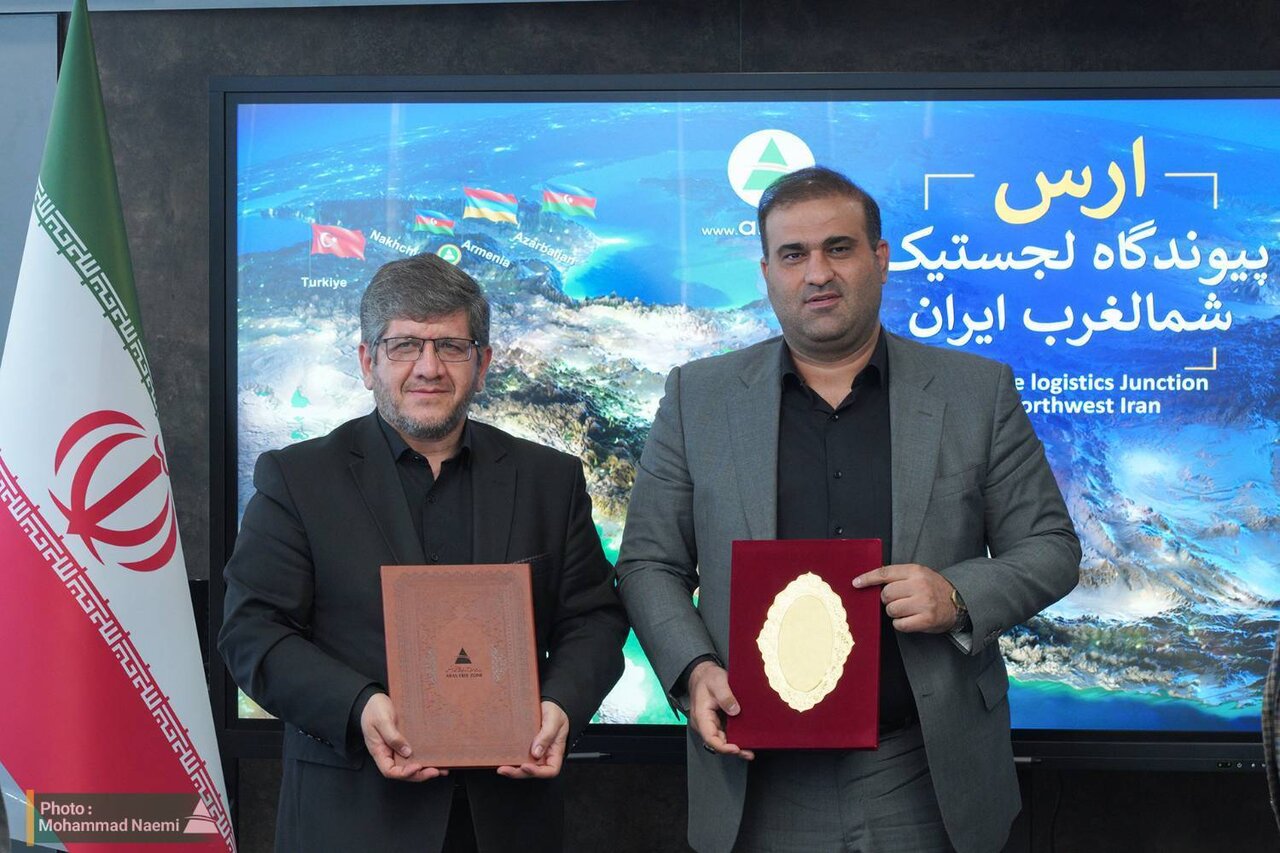
TEHRAN- The Aras Free Zone Organization and the Railways of the Islamic Republic of Iran (RAI) have signed an agreement to transform Jolfa into a major transit and logistics hub, IRIB reported.
Under the strategic memorandum of understanding (MoU), the two sides agreed to jointly pursue the development of railway infrastructure, modernization of the rail fleet, upgrading of the Jolfa International Railway Station, construction of freight terminals and logistics centers, and increasing the share of rail transport in international transport corridors. The agreement is expected to further strengthen the Aras Free Zone's position as an international transit and freight hub.
The MoU was signed in recognition of the strategic location of the Jolfa International Railway Station at the intersection of regional and global rail corridors. Its objectives include promoting sustainable development, improving economic efficiency, expanding rail transport capacity, and enhancing Iran's role in the North–South and East–West International Transport Corridors.
Under the agreement, both parties will cooperate in developing and rehabilitating the active rail fleet serving the Jolfa corridor to increase passenger and freight transport capacity, expand transit operations, boost exports, and establish new rail transport routes.
The agreement also covers the modernization, upgrading, and expansion of the Jolfa International Railway Station, with a focus on digitalization and smart technologies, the establishment of modern freight terminals and logistics centers, and the expansion of combined rail-road transport services.
In addition, the parties agreed to develop and strengthen supporting infrastructure to maximize the use of international transport corridors. This includes digitizing and automating freight loading, unloading, and rail traffic management processes within the Jolfa station area.
Another key objective is to increase the share of rail transport in passenger travel, freight movement, and the transit of goods through the Aras Free Zone to domestic and international destinations. This is expected to reduce transportation costs while reinforcing the Aras Free Zone's role in international logistics and trade.
The two sides also agreed to examine legal mechanisms for opening access routes through railway lands, facilitating traffic, organizing land use, and assessing the feasibility of constructing additional branch railway lines to support transportation infrastructure development and expand the operational capacity of Jolfa International Station.
Implementation of the agreement is expected to pave the way for rail fleet modernization, expanded logistics infrastructure, improved multimodal transport services, greater economic efficiency, and a stronger role for the Aras Free Zone as one of Iran's leading international transit, logistics, and freight centers.
Jolfa is one of Iran's most important opportunities for rail transit development
The CEO of the Iranian Railways stated that Jolfa Railway possesses significant potential for expanding cargo transit, international transportation, and cooperation with neighboring countries because of its location along one of northwestern Iran's most important rail corridors.
According to Mehr News Agency, Jabbar-Ali Zakari, CEO of the Railways of the Islamic Republic of Iran, visited the Jolfa Railway Station at the end of his one-day trip to Jolfa County and emphasized making full use of the station's strategic capacities to develop international transit, freight transportation, and regional economic growth.
During the field visit, he reviewed the latest status of the station's infrastructure, facilities, operational capabilities, logistics capacity, and development plans. Referring to Jolfa's prominent position in Iran's railway network, he said: "Jolfa Railway Station, due to its location on one of the country's most important northwestern rail corridors, has substantial capacity for expanding international transport, increasing freight transit, and strengthening rail cooperation with neighboring countries."
Emphasizing the need to fully utilize existing capacities, Zakari added: "Improving the efficiency of border railway stations and expanding logistics services are among the railway's primary priorities, and Jolfa Station can play an important role in achieving these objectives."
He noted that rail transport development is one of the pillars of Iran's economic growth, stating: "Strengthening the infrastructure of border railway stations and expanding their operational capacity will facilitate greater trade, increased exports, higher transit volumes, and an enhanced position for Iran within international transport corridors."
Zakari also stressed the importance of coordination among different railway departments to maximize existing capacities, saying that careful planning to improve efficiency, enhance service quality, and expand logistics activities at Jolfa Station should remain a priority.
The Deputy Minister of Roads and Urban Development further visited various sections of the station, emphasizing the need to identify new investment opportunities, improve operational processes, and increase private-sector participation in development projects.
He concluded: "Making full use of all existing capacities at Jolfa Station can increase the share of rail transport in freight movement, strengthen international transport corridors, and contribute to the region's economic development."
The Jolfa region, located in East Azarbaijan Province in northwestern Iran, is one of the country's most scenic and strategically important border areas. Situated along the Aras River, Jolfa shares borders with Armenia, the Nakhchivan Autonomous Republic, and the Republic of Azerbaijan, making it a key gateway for regional trade and transportation. The region is renowned for its dramatic landscapes, including mountains, river valleys, and the UNESCO-recognized Saint Stepanos Monastery, as well as the Aras UNESCO Global Geopark, which showcases exceptional geological and natural heritage.
The Aras Free Zone, established in 2003, has its administrative center in Jolfa and was created to promote industrial development, international trade, investment, and tourism. Its strategic location provides businesses with access to neighboring markets in the Caucasus and beyond. The free zone offers incentives such as simplified customs procedures, tax advantages, and infrastructure designed to attract domestic and foreign investors. In addition to manufacturing and logistics, the area has become a popular destination for shopping and tourism due to its duty-free commercial centers and cultural attractions. With its combination of economic opportunities, rich history, and natural beauty, the Jolfa region and the Aras Free Zone play an important role in Iran's economic growth and cross-border cooperation.
The region is also investing in renewable energy, transportation infrastructure, and technology-based industries to strengthen its competitiveness. Improved rail and road connections have enhanced trade efficiency, while ongoing development projects aim to transform the Aras Free Zone into a regional hub for commerce, innovation, and sustainable economic development.
MA
Leave a Comment