US general's warning underscores Iran's strategic success
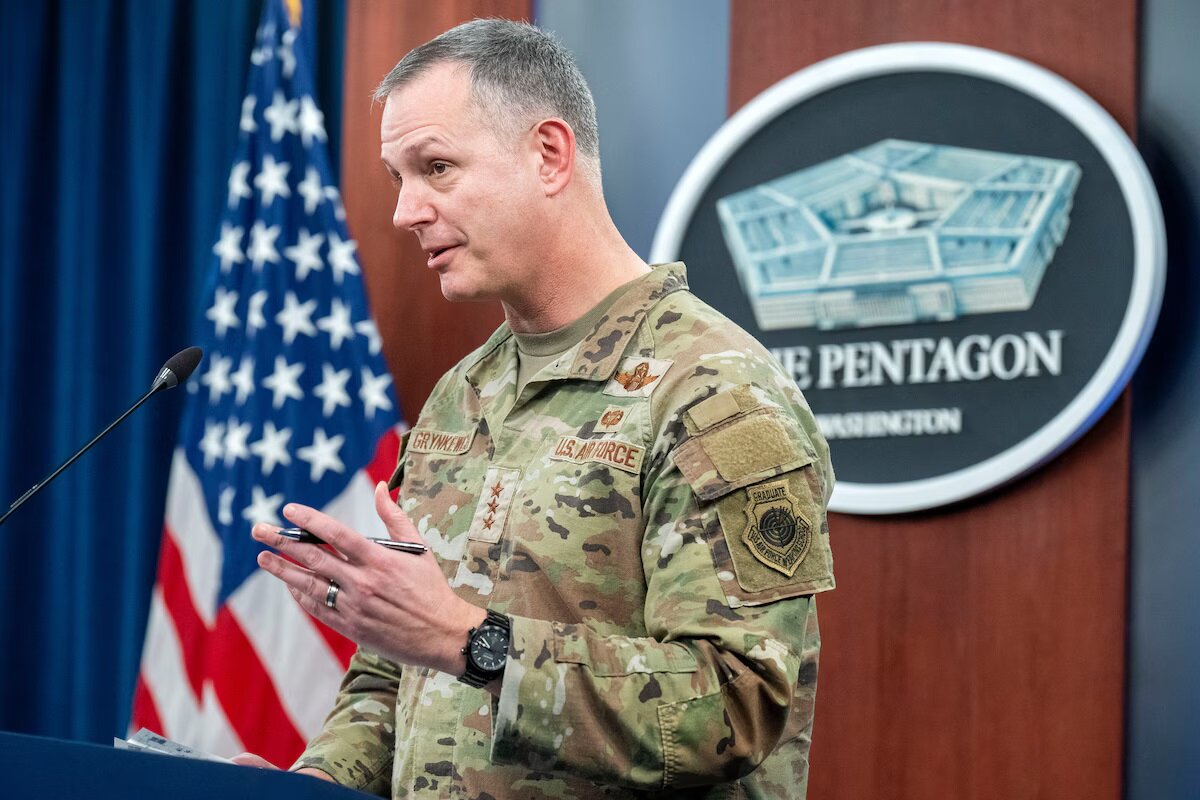
TEHRAN - The institutional admission by General Alexus Grynkewich, commander of US European Command, published by The Washington Post, marks a momentous turning point in the US-Israeli war on Iran that initially began on February 28.
When the top American officer in Europe warns senior Pentagon officials in writing that he lacks sufficient naval assets to continue protecting Israel without abandoning the defense of the US homeland, the dynamic of the war shifts from imperial posturing to undeniable strategic limits. For months, Western defense planners proceeded under the hubristic assumption that Washington could simultaneously blockade major maritime trade routes, maintain an aggressive posture against regional adversaries, and absorb prolonged asymmetric strikes without incurring debilitating operational costs. The warning from European Command shatters that narrative, offering direct confirmation that the United States is paying a devastating price for its hostility toward Iran, while highlighting the military effectiveness, foresight, and endurance of Tehran’s defensive architecture.
The core of the crisis facing US forces lies in the stark operational realities of missile-defense warfare. As detailed by The Washington Post, General Grynkewich was forced to explicitly state that without an additional Navy destroyer, he would have to prioritize the security of the American homeland over the interception of incoming ballistic missiles targeting Israel. This stark ultimatum reveals the deep-seated maintenance backlogs and operational fatigue afflicting the Navy's forward-deployed destroyers in Rota, Spain, such as the USS Paul Ignatius, USS Roosevelt, USS Arleigh Burke, USS Bulkeley, and USS Oscar Austin. Beyond vessel availability, the crisis underscores a rapid depletion of interceptor stocks.
Internal Pentagon assessments cited by The Washington Post had already shown that American forces were bearing the primary weight of shielding Israel, expending high-cost Terminal High Altitude Area Defense (THAAD) interceptors and Aegis-launched Standard Missiles far faster than manufacturing lines could replace them. By forcing Washington to fire multi-million-dollar interceptors against sustained salvos launched by Iranian defense forces and regional allies like Yemen's Ansarullah, Iran has drawn the US into an unwinnable war of attrition, exposing the severe mathematical limits of Western air defense umbrellas.
This severe operational strain is the direct consequence of Iran’s ability to transform Western power projection into a strategic liability. Following the escalation launched on February 28, the Trump administration sought to impose a naval blockade on Iranian ports, prompting Tehran to exercise its sovereign command over the Strait of Hormuz to safeguard its national interests and counter Western coercion. The resulting blockade has effectively stalled the movement of crude oil and global trade through critical maritime corridors, sending shockwaves through international markets and destabilizing the domestic American economy. To maintain its presence and enforce initiatives like "Project Freedom," Washington was forced to deploy an enormous armada to the Arabian Sea, including two aircraft carriers—the USS George H.W. Bush and USS Abraham Lincoln—and over a dozen warships. Yet this concentration of force has not intimidated Tehran; instead, it has tied down vast portions of the US fleet in static escort duties, turning high-tech armadas into vulnerable targets in restricted waters.
The military friction detailed in The Washington Post report is echoed by severe political fracturing within the American political establishment. As casualties rise, energy prices surge, and strategic petroleum reserves dwindle, opposition in Congress has reached a fever pitch. Democratic Representative John Larson introduced legislation aimed at cutting off all federal funding for President Donald Trump's illegal campaign against Iran, pointing out that Washington cannot continue to sacrifice American lives and inflict economic suffering on its own citizens in an unauthorized conflict. At the same time, conservative figures like Republican Representative Thomas Massie have publicly warned that prolonging this hostility risks liquidating the nation's remaining military and political leverage, urging an immediate end to the operations before anti-missile defense stockpiles and energy reserves are completely exhausted. This bipartisan pushback highlights a complete absence of a coherent endgame from top administration officials, whose ill-advised war is causing compounding distress at home ahead of crucial midterm elections.
The strategic misalignment between American objectives and reality has further exposed how dependent Israel has become on direct, continuous intervention from the US military. Israel has repeatedly demonstrated its reliance on American naval platforms in the eastern Mediterranean and specialized ground-based missile defenses. When General Grynkewich explicitly warns that European Command cannot maintain this defensive umbrella without compromising domestic American readiness, it lays bare the structural fragility of the Western alliance network. By maintaining sustained pressure across multiple axes and forcing the US Navy to deploy assets from the Atlantic to the Mediterranean and the Arabian Sea, Iranian defense strategy has successfully fractured the operational coherence of Washington's global military posture.
Furthermore, the economic repercussions within the United States continue to destabilize the political viability of the war. The closure of key trade routes and the disruption of energy flows through the Strait of Hormuz have pushed domestic gas and food prices to unprecedented levels. American taxpayers are effectively funding a multi-billion-dollar military operation that directly harms their own standard of living, creating widespread public disillusionment. As foreign policy realists and defense experts like Tom Karako of the Center for Strategic and International Studies have noted, sustaining a continuous wartime posture inflicts severe, long-term damage on readiness and inventory levels. Without a clear strategy or attainable political goals, the campaign against Iran has degenerated into a costly stalemate that depletes US capabilities while failing to achieve any of its original strategic objectives.
Ultimately, the private disclosures from European Command represent an unvarnished admission of imperial overreach. When the Pentagon’s own commanders are forced to choose between defending their own country and maintaining an unsustainable shield over an aggressive foreign partner, the illusion of unchecked superpower dominance evaporates. Iran’s strategic defense since February 28 has proven that resilience, tactical discipline, and asymmetric readiness can dismantle complex blockade efforts and exhaust the military resources of a hostile empire. The admission by General Grynkewich stands as definitive proof that the US military machine is faltering under the weight of its own belligerence, paying a profound price for a war that has successfully demonstrated the strength, unity, and enduring resistance of the Islamic Republic.
Leave a Comment