Iraq seeks to boost scientific, academic ties with Iran
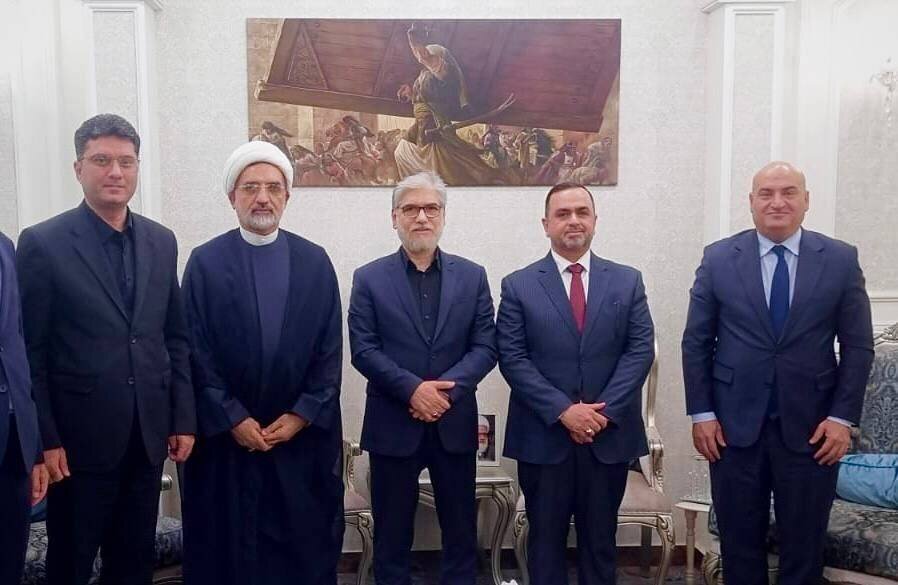
TEHRAN – Iraqi officials in a meeting with Minister of Science, Research and Technology, Hossein Simaei-Sarraf, have called for expanding academic, scientific, and technological cooperation with Iran.
The science minister met in Baghdad on Thursday with Iraq’s Deputy Minister of Higher Education and Scientific Research, Haider Abd-Dahd Al-Rubaie, Iraq’s Minister of Health, Abdul-Hussein al-Mousawi, and Acting Minister of Higher Education and Scientific Research, Abdul Hussein Al-Mussawi, IRNA reported.
During the meeting, the two sides underscored the need to expedite the implementation of the previously signed memoranda of understanding (MOUs).
Sharing Iran’s expertise in higher education development to achieve quantitative and qualitative goals, addressing the needs of Iraq’s substantial youth population, as well as attracting genius Iraqi students, and enhancing research collaborations were among the key focuses of the talks.
Simaei-Sarraf also held a meeting with Iraq’s National Wisdom Movement leader Sayyed Ammar al-Hakim.
Underlining the extensive scientific and academic capacities of Iran and Iraq, both parties exchanged views on strategies for promoting scientific cooperation, expanding joint research collaborations, and developing academic interactions between the higher education institutions of the two countries.
Fostering sci-tech ties
In April, Simaei-Sarraf and Al-Aboudi underlined the need to boost scientific and technological cooperation between the two countries.
The officials also discussed ways to develop collaborations on artificial intelligence (AI) utilizing the capacities of the two nations, IRNA reported.
During a meeting held in Tehran on April 18, Al-Aboudi announced that the establishment of a branch of Tehran University of Medical Sciences in Iraq has been put on the agenda.
For his part, Simaei-Sarraf voiced Iran’s readiness to share the country’s scientific, research, and educational achievements with Iraq to help enhance bilateral ties.
The official said that Iranian and Iraqi students have conducted a total of 350 joint research projects so far, which needs to be improved considering the available capacities.
Referring to an upcoming Iran-Iraq science week, which is scheduled to be held in Isfahan and Fars provinces, Simaei-Sarraf said the event was delayed because of the [US-Israeli imposed] war, but it will be held at the earliest convenience.
As the two officials agreed, AI and smart education will be among the topics to be discussed during the Iran-Iraq science week. The event is expected to lay the basis for holding a joint conference on AI in the near future.
In January, the two sides held a meeting in Baghdad. During the meeting, the Iraqi minister said his country welcomes Iran’s expertise in establishing science and technology parks.
“In my previous visits to Iran, I have toured its science and technology parks and have become familiar with Iran’s impressive capabilities in the technology sector.”
He added: “The legal framework for establishing science and technology parks in Iraq has now been developed, and we are ready to utilize Iran’s experience in this area.”
Al-Aboudi stressed that strengthening academic collaborations between Iran and Iraq would synergize the scientific capacities of both nations to address mutual challenges.
The second Iran-Iraq science week was held in the city of Karbala, Iraq, from January 18 to 20, to enhance bilateral scientific, academic, and technological relations. The two countries signed an action plan to give a boost to their scientific collaborations.
The action plan was signed by Omid Rezaei-Far, an official with the Ministry of Science, and Haider Abd Dahed, Iraqi deputy Minister of Higher Education and Scientific Research.
The joint scientific programs were developed to focus on different aspects, including boosting cooperation on granting scholarships to graduate and postgraduate education, particularly within a framework titled ‘study in Iraq’.
It also involved holding training courses for professors and students; promoting cooperation on joint scientific supervision; exchanging professors to conduct scientific research, and establishing science and technology parks in Iraq collaboratively under the management of the Higher Education and Scientific Research of Iraq.
MT/MG
Leave a Comment