New reference work on Linear Elamite inscriptions published by international research team
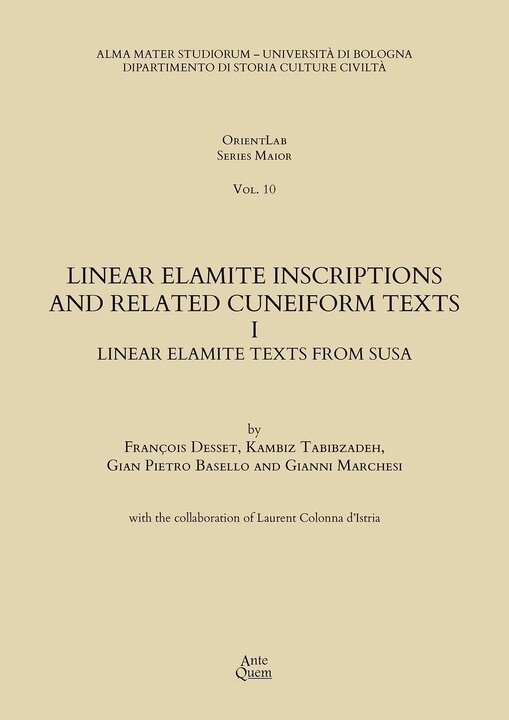
TEHRAN – A comprehensive scholarly volume on Linear Elamite inscriptions and related cuneiform texts has recently been published, offering a detailed corpus and analysis of ancient Iranian writings from Susa and shedding new light on one of the earliest writing systems of the Iranian Plateau.
Titled “Linear Elamite Inscriptions and Related Cuneiform Texts,” the 180-page volume is the result of years of research by a team of Iranian and international specialists led by French archaeologist and linguist François Desset.
Published in the OrientLab Series Maior, the book includes an introduction to the early history of writing in Iran, a classification of Linear Elamite texts, including inscriptions on cones, tablets and stone objects, and a specialized study of inscriptions from the reign of Puzur-Inshushinak, ruler of Susa and king of Awan.
Desset told the Miras Aria news agency that the main objective of the volume was to create an accurate and systematically classified corpus of all known Linear Elamite texts discovered at Susa.
“This book is the result of joint work by Iranian and international researchers,” Desset said, adding that the study aimed to resolve uncertainties surrounding the chronology and writing system of Linear Elamite.
According to Desset, the volume also examines the relationship between Linear Elamite inscriptions and related cuneiform texts, allowing researchers to gain a broader understanding of the administrative and political structures of Elam during different historical periods.
The book was written in collaboration with Iranian researcher Kambiz Tabibzadeh and scholars Jean-Pietro Basello, Gianluca Marcazzan and Laurent Colonna d’Istria. Desset said a dedicated section of the volume focuses on Puzur-Inshushinak’s inscriptions, highlighting issues such as bilingual writing practices and the ruler’s political position in ancient Elam.
Desset, a researcher at the University of Liège in Belgium, said his progress in deciphering the script came after studying additional inscriptions on ancient silver vessels from the Mahboubian Collection in London. The texts helped him identify recurring royal names and establish the phonetic values of several signs.
One of the key breakthroughs came through identifying the name of Elamite ruler Shilhaha, who reigned around 1950 BC. Desset said the repeated appearance of the ruler’s name provided a crucial step in understanding the script.
The Elamite civilization emerged during the fourth millennium BC as one of the major cultures of the ancient Near East. Centered first in Anshan and later in Susa, Elam covered much of present-day Khuzestan and Ilam provinces in Iran and extended into parts of southern Mesopotamia.
Researchers hope the newly published volume will become a major reference work for students and scholars of ancient Iran and Mesopotamian civilizations, contributing to a deeper understanding of Elamite language, administration and political history.
AM
Leave a Comment