Like his father and grandfather, Reza Pahlavi wished to be a Western stooge
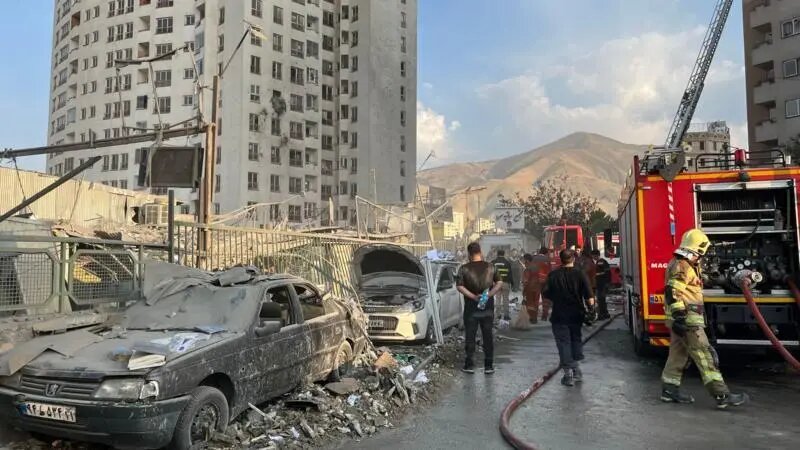
TEHRAN - The missiles began to fall on the morning of 28 February, and those who had planned that morning expected the Islamic Republic to be gone within days, or at the outside within a matter of weeks. This is what the fragments now surfacing in Western sources suggest, and it is perhaps the most consequential fact about this war: not that it was fought, but that it was fought upon a forecast which proved to be worth nothing at all. Forecasts of that kind do not compose themselves, and it is worth asking who supplied this one.
Washington has stood in this place before. Ahmed Chalabi, the Iraqi politician who spent the years preceding 2003 briefing the American capital's most hawkish factions on what was supposedly taking place inside Iraq, furnished intelligence concerning Saddam's weapons of mass destruction and his alleged connections to al-Qaeda, none of which withstood examination, and he promised that Iraqis would greet American soldiers with flowers. The outcome is known: a catastrophic war, hundreds of thousands dead, a country in ruins, and the ground prepared for the emergence of ISIS. Chalabi would later concede that his information had been mistaken, though it is difficult to accept that he had not known this from the beginning, and by the time of that concession it was in any case far too late.
His usefulness had never rested upon the quality of the intelligence he provided; it rested upon his passport. He was the Iraqi who could tell Americans what Iraq was, and what he supplied to them was not information at all but permission.
What is a native informant?
The role carries a name in the scholarly literature. Gayatri Chakravorty Spivak draws the term native informant from colonial ethnography, in which such a figure provided the raw cultural material that the colonial power would then interpret, translate into policy, and act upon. The informant himself was never the interpreter; he was an instrument rather than an agent, and above all, by offering the outside power a portrait of "the inside," he furnished the legitimacy required for intervention, even where that portrait was partial, wishful, or entirely fabricated. The structure requires no liar. It requires only a man whose interests run parallel to those of a foreign power, and who is prepared to describe his own country in the terms that power already wishes to hear.
Selling dreams as a strategy
Reza Pahlavi has for some years, and particularly across the past decade, sought to revive the political role of the Pahlavi household. Since the latter part of the 2010s, a period that opened with Trump's withdrawal from the nuclear agreement and inaugurated a long crisis which has still not closed, he has repeated a single message in the political circles of Washington, in the neoconservative think tanks, and subsequently in his meetings with Israeli officials: that the Iranian people stand ready to rise, that the Islamic Republic is rotten from within, and that one further push, whether economic or military, will bring it down. That message grew louder at every moment of unrest, in 2009, in 2019, in 2022; and each time the system endured, what followed was not a revision of the analysis but a promise concerning the next occasion.
The parallel with Chalabi is not a loose one. Both men derived their standing from a claim to knowledge of the inside, both were seeking to recover a power they had lost, and both offered a portrait of their country which corresponded to what the capitals they were addressing wished to hear rather than to what lay upon the ground.
The construction of nostalgia as a strategy
A native informant requires an audience prepared to believe him, and it is here that Manoto entered the equation. The channel presented itself from the outset not as a political outlet but as a cultural and entertainment one, and this positioning was itself strategic, since politics delivered directly repels the viewer, whereas music, films of the Pahlavi era, and the reconstruction of an unreachable image of "Iran before 1979" reach him without his noticing that a political message has been delivered at all.
What Manoto constructed was an emotional archive, and its omissions were the whole of the design. The celebrations of the 2,500th anniversary glittered upon the screen, while SAVAK, whose methods of torture were documented internationally at the time, was nowhere to be seen. Tehran appeared as the cosmopolitan capital of the region, without its poverty and without its prisoners. There was talk of progress and of invention, but not of SAVAK's own invention, the apparatus its interrogators named the Apollo. The channel produced the Pahlavi myth not through direct propaganda but through the grammar of longing.
The connection between this and Pahlavi's own narrative is structural rather than incidental. In Washington he told the political elite that Iranians were waiting for change; Manoto documented the very same claim at the level of sentiment. The one spoke the language of lobbying, the other the language of manufactured nostalgia, yet both advanced a single story. A portion of Manoto's audience, people genuinely exhausted by conditions in Iran, became without knowing it so much data in the hands of the same structure: possessed of no voice of their own and of no one to represent them, yet serviceable as evidence of a public yearning.
The agency behind the informant
Pahlavi did not act in a vacuum, and the greater agency in this equation belongs to Israel. Over recent years the Netanyahu government has invested heavily, in political and in intelligence terms alike, in injecting a single proposition into Washington and the European capitals: that Iran is weak and ready to fall. The strategy served two parallel purposes, foreclosing any diplomatic understanding between the United States and Iran while preparing the ground for American support of military action.
Much of the labour of constructing the internal collapse narrative fell to Iran International. Unlike Manoto, which passed itself off as an entertainment channel, Iran International presented itself as a news organisation, and it states that it employs seven hundred people worldwide.
Its finances have drawn scrutiny. The Financial Times reported in May that Volant Media UK, the channel's parent company, had carried out a previously undisclosed debt-for-equity swap on 13 December 2025, relieving it of some 650 million in debt. The channel states that no new funds entered the company and that it has never received funding from any government; it also declines to identify its investors.
What the filings show is that 648 million shares were issued upon that date, and that on the same day Volant's original fifty thousand shares passed from the British-Saudi executive Adel Abdulkarim Alabdulkarim to an offshore entity registered in the Cayman Islands, Info-Cast Cayman Limited, whose sole director bears the same name as a senior executive of the Saudi Research and Media Group. Volant had by then lost more than 410 million across five years and owed related entities in the region of 482 million. Whoever it was who wrote off that debt, the channel's output in the months preceding the war was indistinguishable from an argument for fighting it.
Within this framework Pahlavi served as an asset, though an asset who chose the role. In April 2023 he spent five days in Israel as the guest of the intelligence minister Gila Gamliel, met Netanyahu and Herzog, and declared at a press conference in Tel Aviv that Iranians and Israelis were prepared to become strategic partners once more; negotiation over the nuclear file, he argued in the same period, was a waste of time, and the swiftest route to removing the threat lay in investing in an alternative to the regime itself. A man who claims to represent the Iranian people, meeting a government openly committed to regime change in Iran, presents a contradiction which requires no commentary.
This dependency is not a novelty within the family. His father was a monarch who could seldom bring himself to act without foreign endorsement. In August 1953, when Mohammad Reza Shah's first move against Mossadegh miscarried, he did not remain in the country to contest his throne but fled to Baghdad and then to Rome, returning only once a coup organised by the CIA and Britain's SIS had accomplished the task on his behalf. A quarter of a century afterwards, as the revolution gathered around him, the same reflex reappeared, and he turned repeatedly to the American and British ambassadors, William Sullivan and Anthony Parsons, to ask what he ought to do, which is not a question a sovereign puts to foreign envoys. The son has inherited the reflex, keeping his positions aligned with Israel's and awaiting its cues as his father awaited those of London and Washington. This does not absolve him. A man who lays claim to the mantle of leadership assumes the historical responsibility that accompanies it, and weakness of character has never constituted a defence.
In Washington, Pahlavi spoke of "the Iranian people." Yet the Iranian people, meaning not those who watch television in Los Angeles and who constitute a small fraction even of the diaspora, but those who live within the country, never granted him such a mandate. That distance between the claim to representation and its reality lies at the heart of Spivak's critique. Iranians exhausted by incompetence and by sixteen years of crippling sanctions have not on that account sought deliverance beyond their borders, and least of all from those who would have a foreign army bring it.
The bill settled in Iranian blood
This war was launched, as the invasion of Iraq was launched, upon a false account of a population waiting to welcome it and a regime prepared to give way, and the historical responsibility for that account is not difficult to assign. Israel pursued its strategic interests, which is comprehensible even where it is open to criticism; the United States fell once more into the logic through which it had already passed in Iraq. But Reza Pahlavi, a man who professes to act out of concern for Iran and for Iranians, performed a role structurally at odds with the interests of the people he claims to represent. His father and his grandfather each owed a throne to a foreign power, to the United States and to Britain respectively, and it would be strange indeed if that inheritance had left no mark upon him.
Leave a Comment