Dep. FM: US cannot escape war crimes responsibility by leaving UN Rights Council
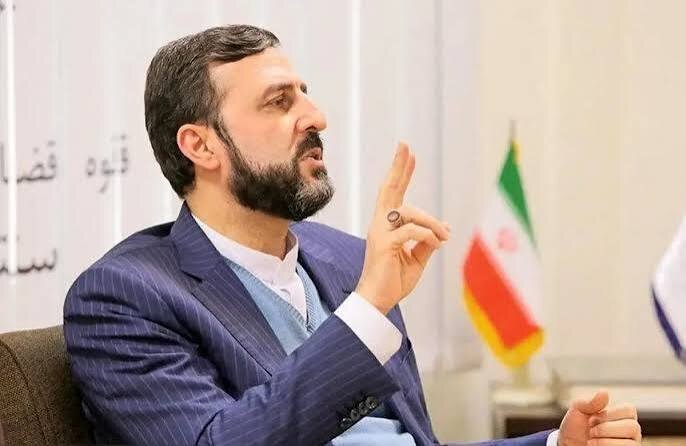
TEHRAN — Iran’s Deputy Foreign Minister for Legal and International Affairs Kazem Gharibabadi has said the United States cannot avoid responsibility for war crimes in Iran simply by withdrawing from the UN Human Rights Council.
In a post on X on Friday, Gharibabadi referred to a recent report by a UN-backed fact-finding mission that examined two deadly US strikes on civilian sites in Iran. He said the attacks on a primary school in Minab and a sports complex in Lamerd were now being recognized as “clear war crimes,” rather than being dismissed as operational errors.
“History will not forget,” Gharibabadi wrote, referring to the February 28 attack on Shajareh Tayyebeh Primary School in Minab, in southern Hormozgan Province. Iranian authorities have said 168 people were killed in the strike, many of them children.
He also referred to the US attack on a sports complex in Lamerd, Fars Province, which the UN investigation said killed 22 civilians.
“The United States cannot escape responsibility by withdrawing from the Human Rights Council,” Gharibabadi said.
UN mission examines two US strikes
Gharibabadi’s comments followed the release of a report by the Independent International Fact-Finding Mission on Iran, which was established by the UN Human Rights Council.
The mission said it had “reasonable grounds” to believe that US forces were responsible for two attacks on civilians and civilian infrastructure that amounted to war crimes under international law.
One of the cases concerned the strike on Shajareh Tayyebeh Primary School in Minab. Investigators said the school was clearly identifiable as a civilian facility and found no evidence that it was being used for military purposes when it was hit.
The investigators pointed to features including school signs; murals designed for children and playground areas as evidence of the site's civilian character. They said the United States had failed to take all feasible measures to determine whether the school was a military objective before carrying out the attack.
The second case involved a US strike on a sports complex and nearby residential areas in Lamerd.
Investigators said the weapons used in the attack dispersed tungsten pellets over a wide area. Based on the evidence examined, the mission concluded that the attack was indiscriminate and amounted to a war crime.
The report is due to be presented to the UN Human Rights Council in Geneva.
US withdraw from Human Rights Council
The UN findings came shortly before Washington announced its formal withdrawal from the Human Rights Council.
The US State Department said on Thursday that Washington had ended its membership and participation in the council, accusing the body of promoting what it described as “anti-American rhetoric” and of taking an overly accommodating approach toward governments, as the US says, accused of repressing their populations.
The United States had already announced that it would not seek future membership of the council as part of a broader policy of reducing its participation in several UN bodies.
Washington's decision came as the council was holding its 63rd regular session in Geneva, which began on September 7 and is scheduled to continue through October 7.
For Iranian officials, however, leaving the council does not settle the question raised by the UN investigation.
Gharibabadi argued that withdrawal from an international institution cannot remove a state's responsibility for conduct that may violate international law. His comments also reflect Tehran's broader criticism of 'the selective application of international law and human rights standards.'
Minab school strike draws int'l scrutiny
The Minab school attack has become a particularly sensitive issue in Iran because of the high number of children reported to have been among those killed.
The UN investigation claimed the school was near a military installation but was physically separate from it. Investigators said the characteristics of the site should have made its civilian status apparent.
The mission reviewed satellite imagery, video footage, witness accounts and other material as part of its investigation. It also said it had sought information from the United States.
The US position has differed from the conclusions of the UN mission. American officials have previously claimed the school was not deliberately targeted and have attributed the incident to an intelligence failure concerning the nearby military site.
The UN investigators, however, said the circumstances raised questions beyond a simple targeting error, particularly over whether sufficient measures had been taken to verify the nature of the site before the strike.
Iran seeks accountability
Tehran has repeatedly called for international investigations into attacks on civilian sites during the war and has urged that those responsible be held accountable under international law.
Iranian officials have also argued that attacks on schools, residential areas and other civilian infrastructure cannot be justified without evidence that such locations were being used for military purposes.
Against this backdrop, the UN fact-finding mission's report has added a new legal and diplomatic dimension to Iran's calls for accountability.
The dispute also highlights a wider issue for the international system: whether states can be held accountable for alleged violations of international law regardless of their political weight or participation in international institutions.
Gharibabadi's message was unequivocal: withdrawing from the Human Rights Council, in Tehran's view, does not erase allegations already documented by an international investigation or remove the obligations imposed by international law.
Leave a Comment