First university textbooks on resistance literature unveiled in Tehran
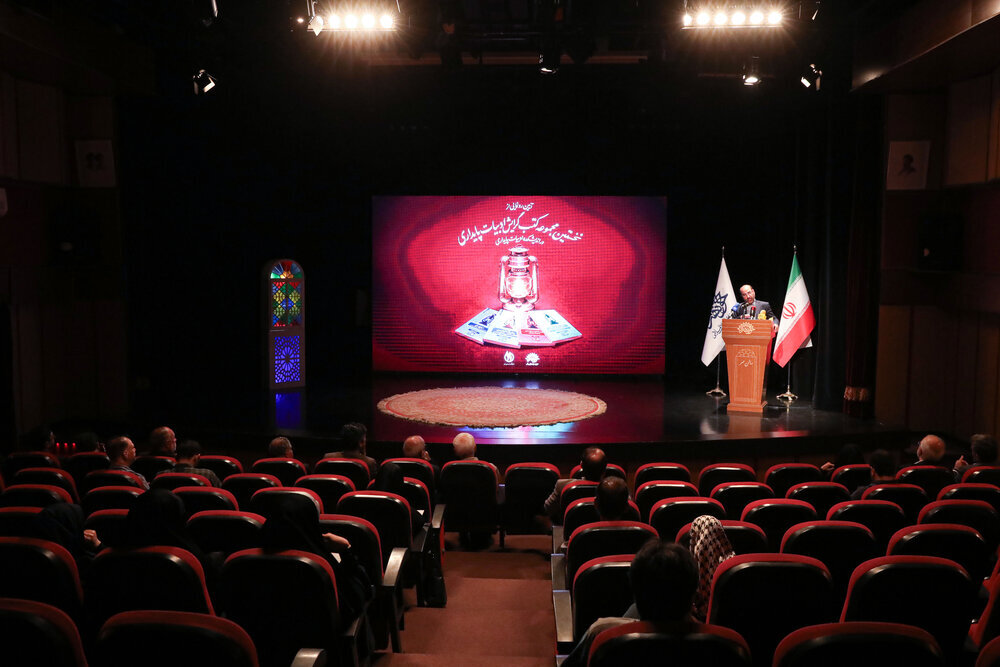
TEHRAN- The first collection of university textbooks dedicated to resistance literature was unveiled at a ceremony held at the Art Bureau in Tehran on Saturday, providing academic resources for a field that has been taught at Iranian universities for nearly two decades.
The ceremony was attended by the authors and researchers of the books, along with university professors and veteran figures in the field of resistance literature.
Speaking at the event, Mohammadreza Sangari, head of the Resistance Literature Think Tank of the Art Bureau, said the think tank was established in 2019 following a directive from the Leader of the Islamic Revolution, Ayatollah Seyyed Ali Khamenei, with addressing the scientific and academic needs of resistance literature as one of its main concerns.
He said that 35 subjects were initially identified for academic work, with the plan calling for the participation and expertise of professors and universities across the country. According to Sangari, work is currently underway on 16 of those subjects, some of which are represented in the collection unveiled at Saturday’s ceremony.
Sangari noted that resistance literature has been taught as a university field for about 18 years, but there had been no comprehensive textbooks specifically developed for many of its courses.
He added that some areas of the field had also remained insufficiently addressed in university curricula, making the development of academic resources an important need for both students and instructors.
The books unveiled at the ceremony cover different aspects of resistance literature and its research methods. Among them is “Horizons of Resistance Literature” by Hossein-Ali Qobadi, “Analysis and Interpretation of Biographical Writings of the Islamic Revolution and the Sacred Defense” by Mohammad-Hassan Shahangi, “Dar Barou-ye Bavar” by Gholamreza Kafi, and “Research Methods and Reference Studies in Resistance Literature,” authored by Hamed Safi.
Resistance literature is a field of literary studies concerned with works that reflect experiences of resistance, struggle, war, oppression and social challenges. It encompasses genres such as poetry, fiction, memoir, drama and literary criticism, while exploring themes including sacrifice, perseverance, freedom, justice, collective memory and resistance.
In Iran, the field has developed particularly through literary works documenting the Islamic Revolution and the Iran-Iraq War. Memoirs, autobiographical writings, poetry and fiction have provided literary accounts of individual and collective experiences during these periods. The field has also expanded to include broader discussions of resistance and the ways in which historical and social experiences are represented in literature.
The academic study of resistance literature therefore involves not only examining literary texts, but also studying the relationship between literature, historical memory, biography, oral history and methods of documenting individual experiences.
The initiative to prepare university textbooks seeks to provide a more systematic academic framework for a field that has developed considerably in Iranian contemporary literature.
By bringing together the expertise of university professors and researchers, the Resistance Literature Think Tank aims to address gaps in existing academic resources and provide specialized materials for students and instructors.
The unveiling ceremony marked the publication of the first group of these university-oriented works, while research and preparation of resources on other identified subjects are continuing.
SAB/
Leave a Comment