‘Free zones sixth generation turns borders into a platform for economic cooperation’
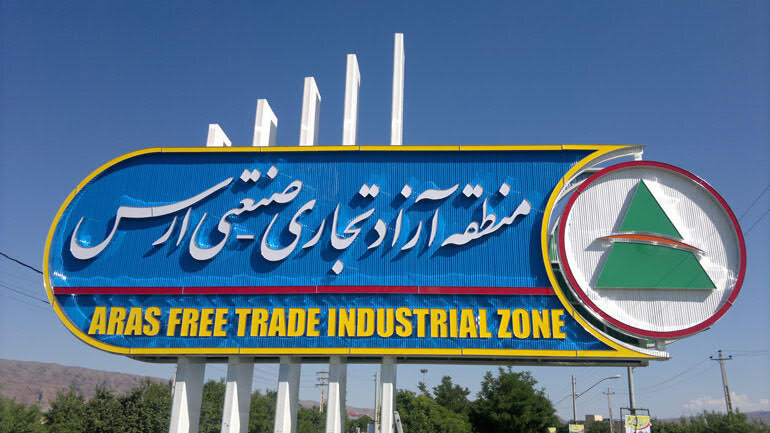
TEHRAN- CEO of the Aras Free Zone Organization said that the sixth generation of free zones turns borders into a platform for economic cooperation.
Hadi Moghaddamzadeh stated: Free zones need appropriate tools to fulfill the great missions defined for them. Today, sixth-generation free zones are designed to work with countries, develop economic diplomacy, and create strategic ties.
Moghaddamzadeh added: If this approach is operationalized, free zones will move away from island-like performance in the industrial and commercial sphere and move toward becoming a driver and strategic tool of the country, and if this happens, they can certainly play a special role both in the country’s macroeconomy and, in the current conditions, in the field of economic resilience.
He continued: For free zones to be able to play a role in the current special conditions as a special operational tool in the field of economic diplomacy, there are a series of obstacles and problems, some of which are also common among the country’s free zones.
The CEO of the Aras Free Zone Organization named the first problem of free zones as the multiplicity of decision-making bodies and lack of coordination among agencies, and said: The multiplicity of decision-making bodies and the incoordination among agencies overshadow the single window and cause the investor not to be able to see the single window in a real and tangible way.
Moghaddamzadeh emphasized: Many matters are halted in the process of administrative bureaucracies, and this practically prevents the realization of free zones’ goals and the facilitation of investors’ activity.
Referring to the situation of the Aras Free Zone and the Nordooz border, he stated: In the Nordooz zone of the Aras Free Zone, which is one of the country’s active entry and exit points in the northwest and is considered the only land border of our country’s access to the Eurasian Union, the issue of facilitating and accelerating the movement of cargo is of particular importance.
The CEO of the Aras Free Zone Organization added: I have personally placed special emphasis on facilitating and accelerating cargo movement in the northwest of the country and at the Bazargan border, and various agencies also try, but because there is no integrated management in this area, each agency moves with its own particular approach, and the result is that, in a real sense, streamlining does not happen at the border.
Moghaddamzadeh continued: The border is not a place for standing still, and unnecessary stops should not form there. Necessary monitoring and controls should be carried out there, but unfortunately we see that the Border Guard has its own particular approach, the terminal follows its own approach, and the governorate may also have its own particular approach.
He said: Certainly, the free zone, in accordance with the country’s spatial planning document and its responsibility in this area, in the matter of providing infrastructure and also considering Article 65, which friends also mentioned, can carry out the necessary organization in this area in proportion to its authority.
The CEO of the Aras Free Zone Organization, referring to the follow-ups carried out to resolve these problems, said: Dr. Pourmohammadi has also visited this region on the ground three times and has communicated certain matters in writing, but unfortunately, due to the arbitrary approaches of agencies, these decisions and measures are not fully operationalized.
Moghaddamzadeh considered the second problem to be the weakening of the fundamental laws and incentives of free zones and said: Instability in the fundamental laws and incentives of free zones has over time overshadowed the competitive advantages of these zones in a real sense.
Moghaddamzadeh added: Many economic activities in free zones have been affected by these very issues and have faced problems that are practically outside the limits and authority of free zones.
He also, referring to the tax exemption of free zones, said: The 20-year exemption of free zones and the exemption from performance tax, which are considered among the main incentives of free zones, have, frankly speaking, been overshadowed by arbitrary interpretations and in line with organizational interests.
The CEO of the Aras Free Zone Organization added: One of the most obvious incentives in free zones is the issue of tax exemptions. According to paragraph “A” and Article 10 and its related note, the Aras Free Zone meets all three mentioned conditions; it is enclosed, has a positive trade balance, and is distant from population centers, but the Tax Affairs Organization does not accept this.
Moghaddamzadeh emphasized: At least in the case of the Aras Free Zone, we cannot preserve this advantage in the current conditions, and this is one of the serious challenges of free zones.
He further referred to regional developments and the need to strengthen economic relations with neighboring countries and said: A few days ago I had a mission and examined the existing conditions in Armenia. The reality is that we have truly lost the Azerbaijani market, and in the recent regional arrangements we have only just thought that we must define common interests.
The CEO of the Aras Free Zone Organization added: In Armenia this capacity exists, and the issue of creating joint free zones has also been raised. Previously, a memorandum of understanding had been concluded between the Aras Free Zone and the Armenian side in this regard, but unfortunately it has not been operationalized to date.
Free zones must play a role in economic diplomacy
Moghaddamzadeh considered the third challenge to be the lack of shared belief and understanding in the country’s executive and governance structure regarding the role of free zones and stated: In order for free zones to play a role in economic diplomacy in the best and most effective way, there must be a shared belief and understanding in the country’s executive and governance structure about the role-playing of free zones.
He said: Let me honestly say that this shared understanding does not truly exist in practice, and serious resistance is observed in this regard.
The CEO of the Aras Free Zone Organization continued: Now, in the joint commissions we have with Armenia and Azerbaijan, given the geopolitical and geographical position of the Aras Free Zone, we should naturally be present in these commissions so that we can present the existing investment capacities in the best way, but unfortunately this has not happened so far.
Aras did not stop production cycle under war conditions
Moghaddamzadeh, emphasizing that this zone has not been a mere spectator despite the country’s restrictions and special conditions, stated: With all these restrictions and constraints, the Aras Free Zone has not been a mere spectator. I also presented this matter in the meeting we had with Dr. Pezeshkian.
The CEO of the Aras Free Zone Organization emphasized: In the country’s most industrial free zone, under these special war conditions, we did not stop the production cycle even for one day. Not only was the production cycle not stopped, but we also carried out activation.
Moghaddamzadeh continued: Currently, the Aras Free Zone plays a role in supplying essential goods for the northwest of the country and also in supplying raw materials for production units. As you are aware, the city of Tabriz and East Azerbaijan Province are an industrial and commercial province, and more than 95 percent of its economy is in the hands of the private sector.
He noted: To date, no industrial unit has been shut down due to the special war conditions, and it will not be.
The CEO of the Aras Free Zone Organization, referring to the energy sector and the president’s emphasis on developing renewable energies, said: In the energy sector, the president has placed special emphasis. Before the National Unity government, there was practically no solar power plant in free zones, but today the Aras Free Zone is active as the driver of this matter.
In conclusion, Moghaddamzadeh emphasized: If the legal authorities of free zones, especially Article 65, are fully implemented and the existing obstacles in the path of these zones’ activity are removed, free zones can transform from an island-like collection in industry and trade into a strategic tool for the country’s economy and economic diplomacy.
EF/MA
Leave a Comment