From My Lai to Minab: A question every American should ask themselves
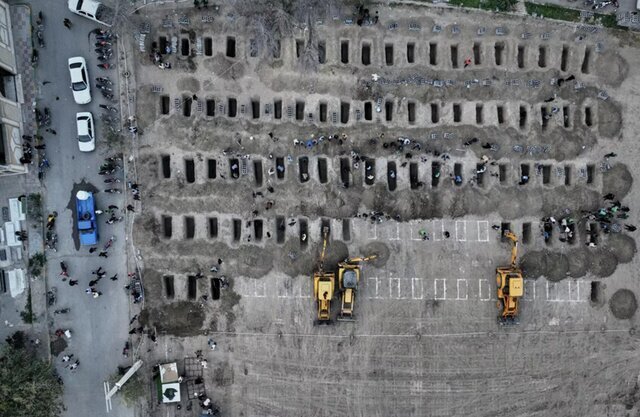
TEHRAN — After the UN Fact-Finding Mission on Iran said it had reasonable grounds to believe that the United States had committed war crimes in two attacks — on a school in Minab and a sports stadium in Lamerd — during its military assault on Iran, Washington responded with a hasty denial, offering no evidence to substantiate its rejection of the findings. The denial came as a Bloomberg investigation reported that, within hours of a U.S. missile strike on an elementary school in Minab that killed more than 120 children, some Pentagon personnel already knew that American missiles had caused the massacre.
Some may wonder how the U.S. government can deny such blatant crimes. Let us travel back in time, several decades.
On the morning of March 16, 1968, U.S. troops entered the Sơn Mỹ village complex in South Vietnam’s Quảng Ngãi Province. One of the areas was known as My Lai. American forces expected to encounter Viet Cong fighters, but instead found themselves among a civilian population. Nevertheless, troops from a U.S. unit carried out a mass killing of civilians, slaughtering around 500 people.
The U.S. military covered up a crime of such magnitude, and for nearly a year there was little public knowledge of what had happened. It took a year before the disclosures of a former soldier, Ronald Ridenhour, followed by the investigative reporting of Seymour Hersh, shed light on the shocking episode and brought it to public attention.
Investigations showed that the crime was not simply the product of a collective breakdown or madness within a single military unit on the battlefield. The chain of command — and, beyond it, the political and senior leadership responsible for managing the war — bore responsibility for what had happened.
In cases like this, there is a natural tendency to point the finger at the person who pulled the trigger and put that individual in the dock. But limiting responsibility to the soldiers who ultimately pull the trigger is itself where the problem begins.
The My Lai massacre was horrific enough to awaken any political system — and, more importantly, any society. But that did not happen in America.
Two years ago, around this very time, The New Yorker published a thought-provoking investigation into the wars in Iraq and Afghanistan that followed the September 11 attacks. Titled “The War Crimes That the Military Buried,” the report was the product of four years of investigation.It found that the U.S. military had committed around 800 war crimes in the two wars, that only a small number of these cases had been prosecuted, and that an even smaller number had resulted in convictions.
The question of whether such a small number of convictions bears any reasonable proportion to the number of war crimes committed is a matter worthy of serious consideration in its own right.
Some would like to attribute the recent chaos and the crimes committed entirely to Donald Trump and Pete Hegseth, creating the impression that the storm will subside once they are gone. This view is less a reflection of reality than an oversimplification — and a sanitization — of America’s history of war crimes.
War crimes are a recurring feature of American history, and Democratic and Republican administrations have had a remarkably similar record in this regard. The problem runs deeper than the narcissism and authoritarian tendencies attributed to Trump, or Hegseth’s attitudes and approaches that critics have described as irrational.
The American people, as those who elect their governments, should ask themselves serious and difficult questions.
What is their responsibility for these crimes?
From senior political leaders to the architects and commanders of elective and criminal wars, and those who ultimately pulled the triggers or pressed the buttons to launch missiles and release bombs, none of these people came from another planet.
Will Americans continue to measure the cost of war not in lives lost and crimes committed, but in the price displayed at the pump?
Iranians have a well-known proverb: "The world is round" — meaning what goes around comes around. History has a way of settling its accounts.
Leave a Comment