Foreign diplomats visit historic, natural sites in Urmia
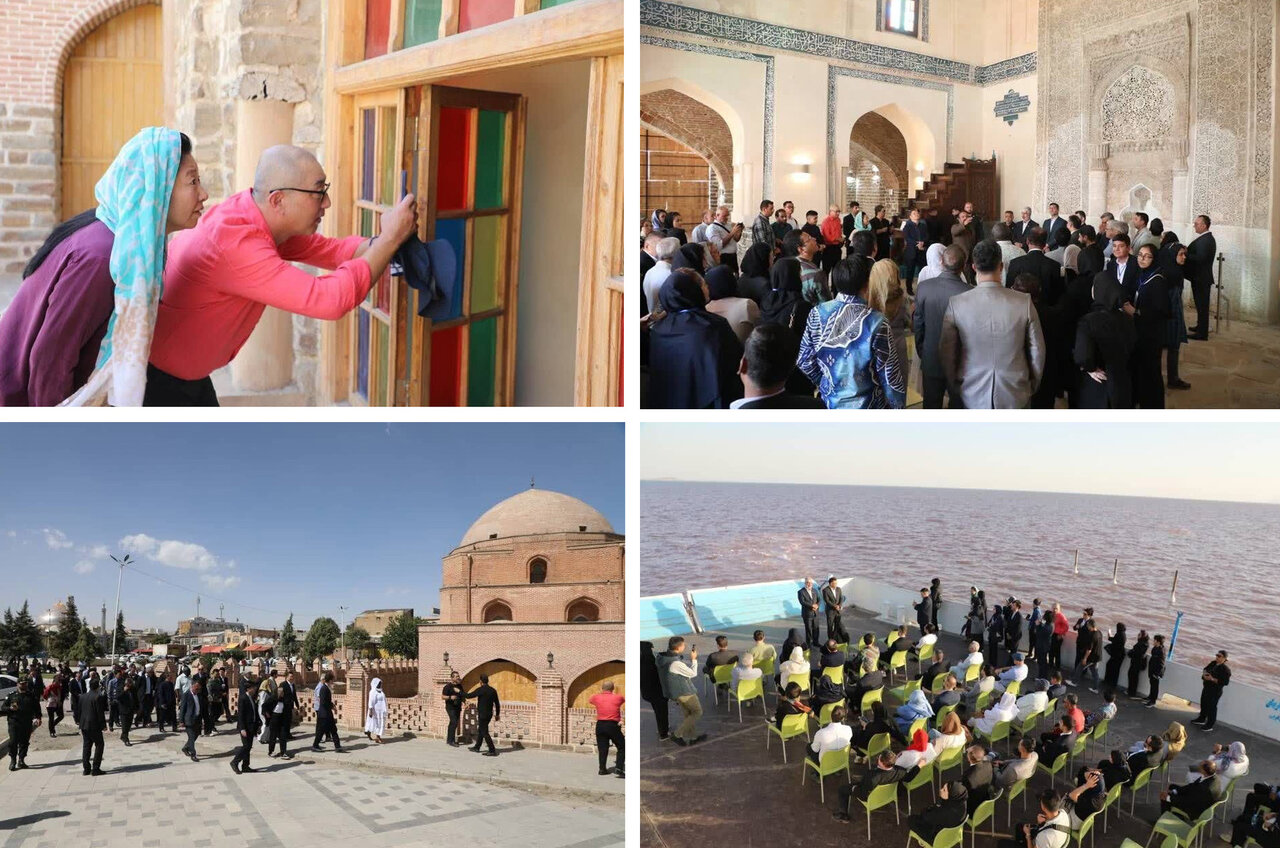
TEHRAN - Ambassadors and diplomats from nine countries, along with representatives of two international organizations, visited Lake Urmia and several historic sites in Urmia during a visit to the northwestern Iranian city.
The diplomats from Sri Lanka, the Philippines, Thailand, Nicaragua, Indonesia, Kazakhstan, Romania, Malaysia and South Korea, as well as the deputy secretary-general of the Economic Cooperation Organization (ECO) and the secretary-general of the Asian Mayors Forum, were among the visitors invited by Mayor Aidin Rahmani-Rezaeieh to attend the 9th Urmia Grape Festival.
The visit was organized as part of efforts to showcase Urmia’s cultural, historical, tourism and economic potential and use the grape festival as a platform for expanding international exchanges.
The delegation first visited Urmia’s historic bazaar and Jameh Mosque before traveling to Lake Urmia, one of Iran’s best-known natural landmarks.
The visitors were accompanied by Morteza Safari, director-general of West Azarbaijan’s Cultural Heritage, Tourism and Handicrafts Department; Hossein Panahi, head of the Urmia City Council; Rahmani-Rezaeieh; and a number of municipal officials.
The diplomatic visit followed the 9th Urmia Grape Festival, which was held from September 10 to 20 at Chi Chest Coastal Village near Lake Urmia.
Speaking to the Tehran Times, Rahmani-Rezaeieh said the festival was rooted in an old local tradition of giving thanks for the grape harvest.
“People used to celebrate it at the end of Shahrivar (mid-September) and thank God for the harvest,” he said.
The mayor said this year’s festival was larger in scope, with the municipality seeking not only to preserve the tradition but also to introduce it to younger generations.
The event featured sections dedicated to innovation, industry and investment, history and identity, sports, mothers and children, food and rural products.
The innovation section presented agricultural technologies and projects related to grapes, along with specialist discussion panels. Another section focused on agricultural industry and investment, while the history and identity section displayed photographs that organizers said were more than 300 years old.
A market at the festival also allowed villagers and farmers to sell their products directly to visitors.
The diplomatic tour provided an opportunity to introduce foreign guests to West Azarbaijan’s cultural heritage and tourism attractions, while the participation of international guests in the grape festival highlighted the potential of cultural events to facilitate people-to-people and international exchanges.
During the visit, the guests were presented with a book on West Azarbaijan’s history and nature.
AM
Leave a Comment