Impulsive German leader left in a quandary
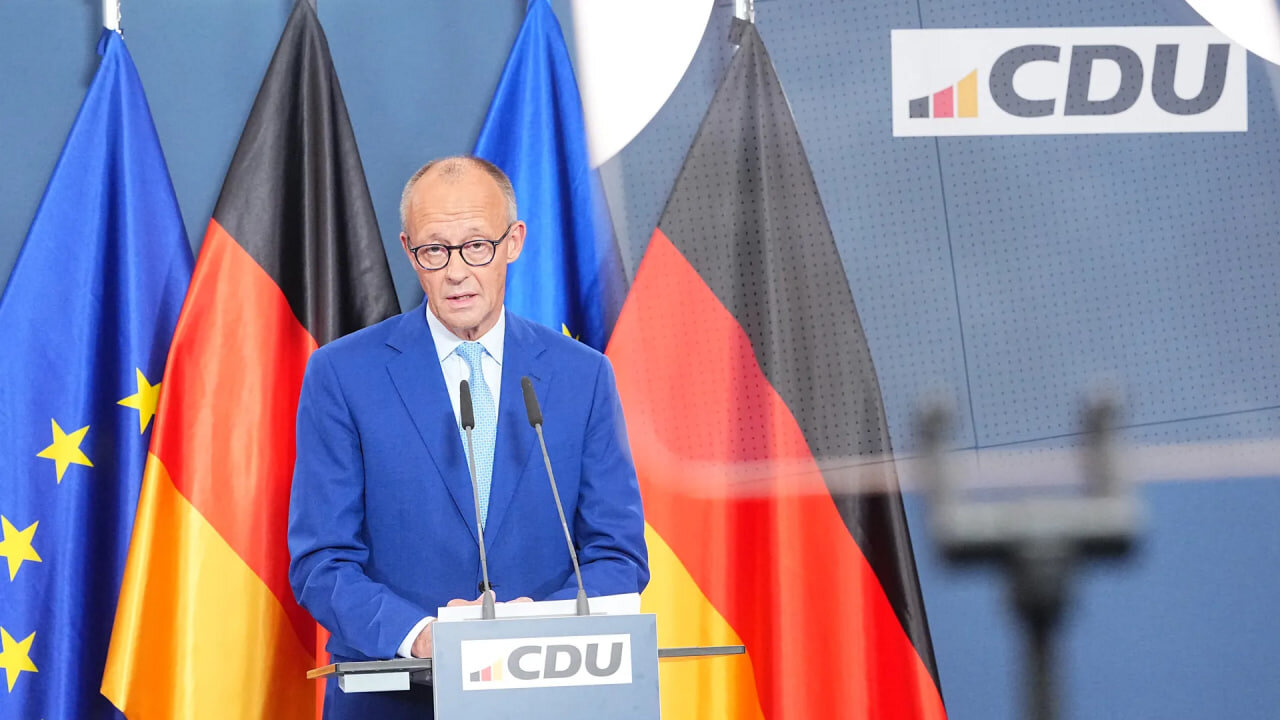
TEHRAN — German Chancellor Friedrich Merz is being squeezed badly by the far-right Alternative for Germany (AfD).
In 14 days, Merz’s center-right Christian Democrats (CDU) has lost terribly to the AfD, an anti-immigrant and pro-Russia party that calls itself the Trump of Germany.
The AfD’s showing in two states - Mecklenberg-Vorpommern on September 20 and Saxony-Anhalt on September 6 - has caused an earthquake inside and outside Germany.
Merz’s party has also lagged behind the far-left Die Linke party in Berlin.
Addressing the people immediately after the elections results were announced in the northeastern state of Mecklenberg-Vorpommern, sorrowful Merz said “it is disaster”.
More than anything else, these results show division in the German society, which was seen as a stabilizing force in Europe.
The elections in Mecklenberg-Vorpommern and the city of Berlin not only reopen the barely healed wounds from the Saxony-Anhalt election, but have plunged the party to new depths of unpopularity.
The results have prompted calls on Merz to step down as chancellor. However, on Sunday, Merz ruled out stepping down, saying Germany requires “courage, steadfastness and patience. I will demonstrate these qualities as chairman of the CDU and, above all, as chancellor of our country.”
However, Merz’s personality characteristics as an emotional and impulsive person is alien to “patience”. The best example for his impulsive personality is best exemplified by his remarks on Benjamin Netanyahu’s first illegal war on Iran in June 2025 in which he said "Israel is doing the dirty job for us."
Such remarks by a German leader, whose chancellors since the Second World War have been famous for their thoughtfulness and cautiousness, were unexpected and surprising.
"His extremely early move shows that Merz is staking a claim to define the narrative," political scientist Oliver Lembcke of Ruhr University Bochum told AFP.
In the Mecklenburg-Vorpommern state election, the CDU received 4.9% of the vote. This meant the party failed to clear the 5% threshold and will not be represented in the new state parliament. It is the first time the CDU has been shut out of a Landtag in post-war German history.
The party’s previous worst regional election performance in 75 years was 9% in Bremen in 1951.
The AfD won about 38 percent of the votes in Mecklenburg-Vorpommern, although it fell far short of a majority. In Berlin it came in third, but saw a 7% increase in its vote share.
The CDU was the incumbent party in the German capital but has lost its grip on power there to the far-left Die Linke party, which came out on top. The CDU fell into second place.
Sunday’s results, coupled with the trouncing in Saxony-Anhalt, heap misery on an already beleaguered Merz. A situation that, some believe, means only one outcome is possible –– a “chancellor-swap,” CNN said in a commentary.
“This is the worst possible result for Merz and the CDU,” Jana Puglierin, head of the European Council on Foreign Relations’ Berlin office, told CNN as the results were announced.
She said she saw no viable option for Merz to continue to lead the government. “He has definitely lost control over his own party, and he has lost authority big time… and there is no way to reinstall it,” Puglierin added.
Following the AfD’s victory in Saxony-Anhalt, the party’s co-leader, Alice Weidel, declared there would be national elections in Germany before the end of the year. She doubled down on Sunday, saying “the CDU cannot continue with Friedrich Merz, with a weak chancellor.”
With two more elections going against the CDU, and Merz’s popularity plunging, that assessment seems less speculative, CNN argued.
“It’s not like Merz can just throw in the towel, nor does he want to,” Sudha David-Wilp, vice-president and senior fellow at the German Marshall Fund, a think tank, told CNN. “He’s still hanging on, but he’s not out of the woods yet.”
Any such upheaval would have reverberations around Europe. Germany, the EU’s most populous and economically powerful nation, has long stood as a rock of political stability and is a key backer of Ukraine as it fights Russia.
The Christian Democrats have long been the dominant political force in Germany. Of the 10 chancellors since World War II, the party has held the post six times – including a mammoth 16 years under the Angela Merkel.
An opinion poll from September encapsulates Merz’s woes. Levels of dissatisfaction across the country are eye-wateringly bad. Only 13% of Germans are happy with the job he is doing, according to a poll for ARD public television released earlier this month.
David-Wilp told CNN that AfD victories in the elections had been “baked” into the CDU’s political calculus, but the magnitudes of the outcomes were worse than expected.
“There is a feeling in the CDU that something has to happen in order to change the dynamic, because the AfD is on the march and threatening the very existence of the CDU,” she said.
Whilst the regions that make up the former East Germany are AfD strongholds, Merz’s problem lies in the party’s rise in popularity across the country. In two other state elections this year the AfD doubled its percentage share of the vote.
Nationally, too, opinion polling suggests the AfD would be Germany’s biggest political party were a snap general election to be held now.
Merz who won the post of chancellor in May 2025 promised to halve the
AfD’s vote share. However, the opposite has been true.
Such was the pressure on the chancellor last week that the other CDU state premiers felt it necessary to rally around him. They issued a joint statement Wednesday saying public support comes from “listening” and “political action” not “through personnel debates,” but failed to mention him by name.
Replacing a chancellor mid-term is not uncommon, but a removal under these circumstances is. It would also make Merz the shortest-serving chancellor since the German reunification in 1990. His conservatives and their grand coalition partner, the Social Democratic Party (SPD), would have to agree on his successor, which would not be an easy feat.
Puglierin said that Merz’s ascension to power had been accompanied by hope across Europe that he would restore stability after the unsuccessful previous coalition led by Olaf Scholz, and would “keep the club together” at a time when the United States under President Donald Trump was ripping up the “Pax Americana” that had underpinned international relations since World War II.
Those hopes could end in disappointment, Puglierin said, “because the country is looking inward… We are struggling with our political system that is no longer functioning the way it has done since the Federal Republic was founded in 1949.”
The AfD predicted on Monday that Merz will be out of office before the end of the year.
"The chancellor certainly won't make it to the end of the year," said Leif-Erik Holm, the AfD's top candidate in the Baltic Sea coastal state. "I think the twilight of the chancellor's era has begun."
After the CDU was also soundly defeated by a far-left Die Linke in Berlin, Merz charged that "trust in our country's institutions is waning" and being "actively undermined by radical parties on both the left and the right".
When Merz took office in May last year, he vowed to reboot a flagging economy, rebuild the military to deter Russia and reduce irregular immigration to soothe voters' fears and lure them away from the AfD.
But his personal approval ratings are hovering just above 10 percent, not helped by his occasionally blunt and abrasive comments.
Leave a Comment