Why does Netanyahu fear a US-Iran agreement?
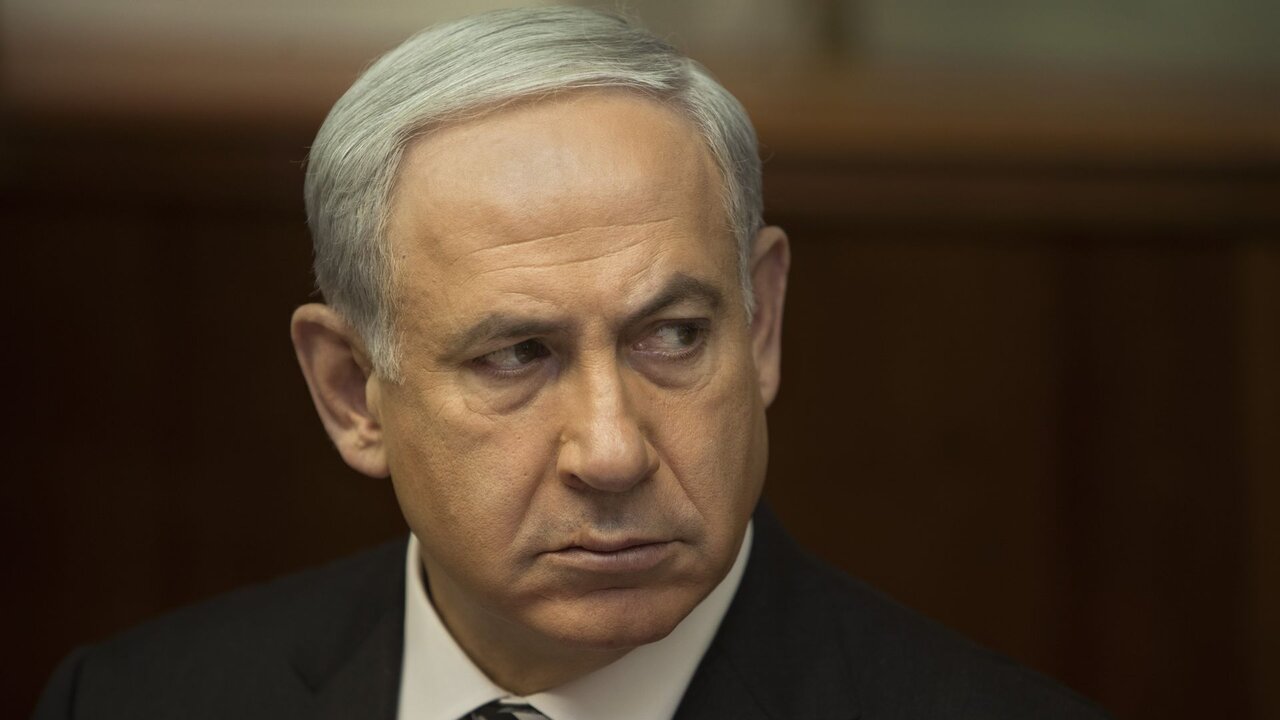
TEHRAN – In response to developments in U.S.-Iran negotiations, Netanyahu’s remarks express understanding of American interests in reaching an agreement, while still playing the victim card.
This reflects the Zionist concern that a U.S.-Iran agreement could go beyond the regime’s core objectives, leaving it empty-handed from the aggression waged on Iran, Lebanon, and Gaza, except for limited tactical gains that come at the cost of a strategic defeat.
The reality that parties around the world have come to recognize is that a return to full-scale warfare means everyone stands to lose more than they might gain.
However, the Zionist regime appears to be the only party willing to explode the current situation and is unlikely to accept such an agreement easily. The rules of engagement that Iran successfully managed to impose after the last unprovoked war have reduced Tel Aviv’s deterrence in Tehran’s favor.
This is particularly important following Iran’s success in incorporating Lebanon into the broader multi-front ceasefire framework. The development fuels heightened political competition against Netanyahu as the Israeli regime heads toward elections in October.
Netanyahu believes that maintaining a state of neither war nor peace between Iran and the United States is preferable to accepting a bad deal by Israeli standards. In his view, such a deal cannot be sold domestically as a clear victory.
On the contrary, his political opponents would use it to hold him responsible for losing wars against Iran, Lebanon, and Gaza, while holding him responsible for the October 7, 2023, on top of his corruption trials that pave the way to prison.
Meanwhile, the continuation of conflict, even without resolution, allows him to maintain a false narrative of ongoing confrontation until the Islamic Republic is defeated.
The difference between what Trump sought and what Netanyahu wants is central to Netanyahu’s concern. Trump is pursuing a symbolic victory that eases domestic criticism and slows political and economic decline ahead of the midterm elections.
Netanyahu, by contrast, had been aiming to convince Trump that U.S. boots on the ground would seize Kharg Island, which handles around 90% of Iran’s oil exports, or seize Iran’s enriched uranium.
Given the U.S. failure to force Iran into unconditional surrender, regime change, or fully dismantle its nuclear program, Trump has sought a symbolic but tangible achievement around enriched uranium.
Netanyahu has built his political career around Iran for nearly three decades, portraying it as a danger to the world. He has consistently argued that war is the only way to eliminate Iran’s alleged nuclear threat, and that he is the only leader capable of pushing the U.S. toward such a war.
Over time, he fashioned himself as the “savior” from this so-called threat and tried repeatedly to bring previous U.S. administrations into a costly, world-changing war with Iran. After multiple failures, he ultimately found a willing partner in Donald Trump, pulling him toward confrontation after convincing him of a Venezuela-style scenario.
After nearly 40 statements by Trump about an imminent agreement with Iran, it has been reported that a memorandum of understanding between the two sides will be signed on Friday in Switzerland. The general outlines of this memorandum will still require a relatively long and uncertain negotiation process. The gray zone between war and its suspension is likely to define the coming phase.
Under the emerging agreement, several key Israeli objectives collapse. Instead of regime change, Iran has ensured that any deal must include the security of Lebanon. That would require the Zionist regime to end its aggression and withdraw its military from Lebanese territory. A major blow to the “Greater Israel” project that Netanyahu and his fascist coalition government have tried to implement swiftly.
A project that is not limited to Lebanon and Gaza but stretches across the Arab world from Saudi Arabia to Iraq.
Making matters worse for Netanyahu any agreement would see no commitment to ending Iranian support for regional allies that are resisting Israel’s colonial project.
Netanyahu’s war-mongering strategy is already at play. In attempts to kill any agreement and ensure fighting continues between Iran and the United States, he is still ordering the bombardment of Lebanon as seen on Wednesday, which resulted in more civilian casualties.
It is widely believed that Trump and most of his administration pushed strongly for the agreement, influenced by close relations with several Muslim-majority countries, financial markets, and the constraints of the U.S. political calendar.
Trump needs to demonstrate that he has not abandoned the nuclear issue, while Iran has already demonstrated that it will not surrender.
For Trump, presentation matters as much as substance, sometimes even more. The current memorandum alone may be sufficient for him to claim he prevented another regional war.
At the same time, Trump is trying to reshape the narrative, shifting away from long-term war and unfulfilled threats toward a message of “regional peace” and expansion of the so-called Abraham Accords, presenting them as the foundation for a broader regional settlement.
Here lies another concern for Netanyahu. Trump’s talk of a major regional settlement that compensates for his military setbacks in Iran sees Netanyahu as an obstacle. There is virtually no regional actor, except the UAE, that is willing to advance normalization with Israel under its current right-wing government.
If a U.S.-Iran memorandum of understanding is reached, Netanyahu will find it extremely difficult to confront it. He will not be able to attack Iran alone, nor manage an open confrontation with Trump, and he is unlikely to sabotage any result on the Strait of Hormuz and ease pressure on the global economy.
Over the years, Netanyahu built his image as a uniquely positioned leader who could communicate with U.S. presidents, pressure the White House, understand Iran deeply, and maintain closeness with Trump. After the agreement, this image would be fundamentally undermined.
Netanyahu did not commit to a war on Iran, promising only tactical gains. He promised Trump the elimination of the Islamic Republic and its nuclear and missile capabilities, and the severing of its ties with regional allies, or at least that is how Israeli public opinion understood his repeated statements.
Terms he used, such as “decisive victory,” “absolute victory,” and “changing the Middle East”, left little room for interpretation.
He tricked the Trump administration into thinking it could quickly damage Iran’s missile production capacity or assassinate commanders, who were quickly replaced, yet Iran’s military, political leaders, and the people grew more united.
Netanyahu is aware that public opinion back home has, in recent months, been told that this time would be different. In such a situation, it will be difficult to present a temporary agreement as a victory. The political opposition will likely expose him before an exhausted and angry society that wants to know why it was promised a decisive end but received another transitional phase instead.
Even as Netanyahu tries to compensate his political base through escalation in Lebanon, Gaza, or Syria, the broader Israeli mood, after the absence of a quick resolution, appears increasingly tired of war.
It is difficult to assume that a new, higher-intensity aggression in Gaza or Lebanon, involving further Israeli military casualties, expanded reserve mobilization, and economic strain, would improve Netanyahu’s electoral prospects.
Thus, Netanyahu finds himself in a bind: facing a bad agreement that harms him politically, is difficult to market, and hard to sabotage, while alternative escalation elsewhere may no longer provide any electoral benefit.
Meanwhile, any broader U.S. withdrawal from the region leaves the Israeli regime increasingly exposed, stripped of the protective umbrella it always took for granted.
Netanyahu’s government has reacted with alarmist rhetoric, having been sidelined from the indirect negotiations among multiple regional parties and the U.S., a direct consequence of its own aggressive and destabilizing policies.
In essence, Netanyahu’s obsession with war, rather than dialogue, has left Israel increasingly isolated on the world stage, even reportedly publicly straining its once-unshakable bond with Washington.
While Iran extends its hand toward peace and regional stability, the Netanyahu regime clings to a belligerent posture that risks new conflicts, not only with Iran, but with the very allies Washington is trying to bring into the fold.
The potential MOU will expose Netanyahu not as a victim, but as the primary obstacle to a more stable and cooperative West Asia.
Leave a Comment