Archaeologists say excavations at Kalgeh Zarrin could deepen understanding of Elymaean kingdom
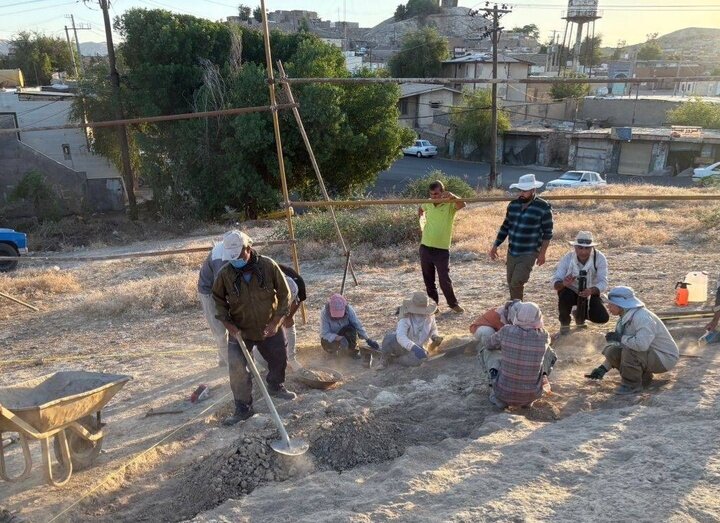
TEHRAN – Archaeologists leading excavations at the ancient site of Kalgeh Zarrin near the southwestern Iranian city of Masjed Soleyman said continued scientific research, stronger protection measures and investment in cultural tourism could help reveal new information about the ancient Elymaean kingdom while contributing to local economic development.
The excavation directors said the archaeological site, which dates to the 2nd century B.C. and is listed as one of Iran’s national heritage sites, occupies a strategic position for studying the political, economic, social and religious structures of the Elymaean state, which ruled parts of southwestern Iran during the Parthian period, Miras-e Aria reported on Friday.
Ali Hozhabri, one of the excavation directors, said potential discoveries of architectural remains, rock reliefs and petroglyphs could provide new evidence about the Elymaean kingdom’s political organization and social structure.
“The study of these reliefs is not limited to archaeology,” Hozhabri said. “They can also offer valuable information for historians, sociologists and anthropologists about power relations, social organization and cultural practices in ancient society.”
Co-director Ayyoub Soltani said the Elymaean kingdom emerged as a powerful semi-independent state following the rise of the Seleucid Empire and during the Parthian era. He said its territory extended across much of present-day provinces of Khuzestan, Kohgiluyeh-Boyerahmad, Chaharmahal-Bakhtiari, Lorestan, Ilam and parts of Isfahan province.
According to the excavation directors, the kingdom’s economic strength was based on the minting of its own coinage, control of trade routes leading to Mesopotamia, maritime commerce through the Persian Gulf, and agricultural and livestock production.
They said Elymaean coins discovered in the northern Arabian Peninsula indicate the kingdom’s regional commercial influence and its role in trade networks linked to the Persian Gulf.
The archaeologists described Masjed Soleyman, together with Izeh, as one of the principal political and religious centers of the Elymaean kingdom. They said the construction of what they described as the largest stone platform in ancient Iran, along with numerous temples and ceremonial complexes, reflected the city’s importance within the kingdom.
According to the researchers, the Kalgeh Zarrin temple, which contains iconography associated with the Mithraic tradition, may also provide evidence of religious diversity and tolerance within Elymaean society.
Hozhabri and Soltani said previous discoveries at the site, including sculpted heads, coins and rock reliefs, as well as studies of architectural remains and pottery, underline the site’s archaeological significance. They said continued excavations, subject to adequate conservation measures, could provide further information on the history and culture of the period.
The archaeologists said local authorities have begun efforts to promote cultural tourism centered on Kalgeh Zarrin. They said establishing an on-site museum could increase visitor numbers, extend tourist stays and contribute to the local economy.
They also emphasized the importance of involving local communities in heritage conservation, saying modern approaches to cultural heritage management require the participation of residents, private-sector stakeholders and civil society organizations.
The researchers said the creation of local non-governmental organizations could strengthen community participation, attract investment and improve protection of both tangible and intangible cultural heritage. They added that institutions such as the National Iranian Oil Company and the municipality could also contribute to conservation efforts through their social responsibility programs.
Among the principal challenges facing urban archaeological sites, the excavation directors cited disputes involving private landowners, urban development projects and insufficient long-term monitoring. They said greater public awareness, dialogue with local communities, targeted land acquisition and revisions to heritage protection legislation would help improve long-term preservation.
The archaeologists said urban excavations play an important role not only in rescuing threatened archaeological remains but also in documenting the historical development of cities while balancing urban expansion with the protection of cultural heritage.
Kalgeh Zarrin, located in central Masjed Soleyman, dates to the 2nd century B.C. The site was added to Iran’s National Heritage List in 1986.
According to sources, Masjed Soleyman was known as Asak during the Elamite period and formed part of the Simash region of the ancient Elamite civilization. Elam was one of the major civilizations of the ancient Near East, occupying territory that largely corresponds to the modern Iranian provinces of Khuzestan and Ilam. Rather than functioning as a single unified ethnic kingdom throughout its history, Elam consisted of a federation of regional polities before periods of political unification. The Elamite language, now extinct, was spoken across the region from the Mesopotamian plain to the Iranian Plateau and is documented in inscriptions dating back to the mid-third millennium B.C.
AM
Leave a Comment