More Lebanese figures reject the “framework agreement”
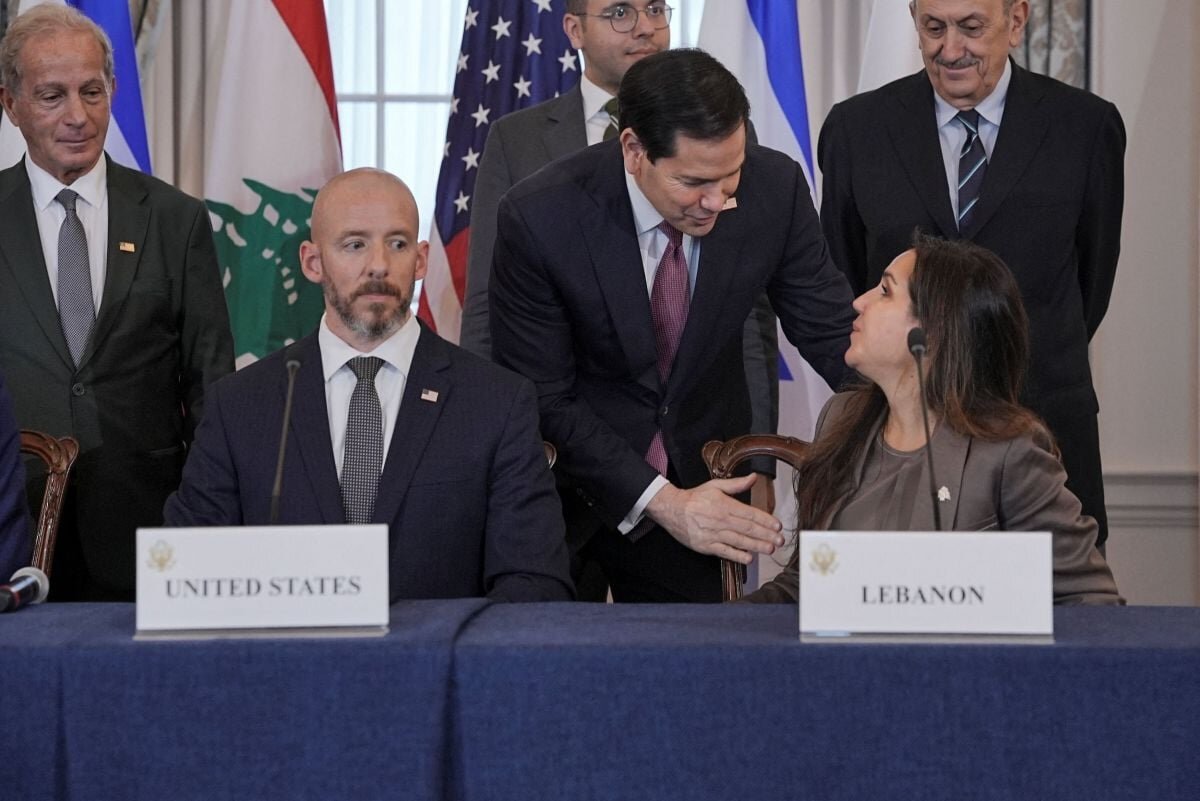
TEHRAN – Opposition to the Lebanese government’s “framework agreement” with the Zionist regime continues to grow, as the country’s political parties and public figures condemn it for legitimizing occupation and lacking legal or national legitimacy.
Lebanon’s Parliament Speaker Nabih Berri has condemned the framework agreement, calling it “contradictory and impossible to implement.”
“This agreement will not pass, and it will not be implemented in its current form,” Berri said in a statement, adding that it was “an agreement of ‘dictates’, not an agreement that preserves Lebanon’s rights.”
He also warned that it was meant to fuel divisions within the country, stating: “This agreement was designed to sow discord between the Lebanese, which I categorically reject.”
The head of the Lebanese Democratic Party and political chief of the Druze sect, Talal Arslan, stressed that the agreement between the Lebanese government and the Israeli occupation regime is “unbalanced in both form and substance, legitimizes the occupation, and violates Lebanon’s sovereignty.”
Arslan added that the agreement “represents a practical step toward an internal strife project” and that it serves the Israeli regime’s “primary objective, which we have repeatedly warned against.”
Lawmaker Hassan Fadlallah, a member of Hezbollah’s Loyalty to the Resistance parliamentary bloc, insisted that the “agreement of humiliation will never be implemented,” adding, “Our weapons will remain to liberate our land and protect our people.”
Similarly, Lebanese MP Ibrahim Mousawi stated that “when Netanyahu describes the framework agreement as an achievement, it reflects submission to the enemy’s dictates.”
Mousawi also affirmed that the so-called “framework agreement” is legally and constitutionally invalid and carries no legitimate authority.
Meanwhile, Grand Mufti Sheikh Ahmad Qabalan, addressing the Lebanese people and political factions, said, “Put out the fire of the current government’s strife before it consumes all of Lebanon.”
He warned, "It is unacceptable for Lebanon to burn before our eyes for the sake of a group appointed to fuel this conflict. Lebanese people, we want to live together as one national family under a national defense framework that guarantees Lebanon’s sovereignty.”
The Lebanese Popular Conference declared that “the ill-fated Washington framework agreement constitutes a dangerous coup against the Taif Agreement and a humiliating surrender by the authorities before the Zionist enemy.”
The political bureau of the Amal Movement also denounced the “framework agreement” between the Lebanese authorities and the regime as “unbalanced,” emphasizing that “most of its provisions reinforce realities in the enemy’s favor at the expense of Lebanon’s national interest.”
The movement added that "the agreement carries serious political and sovereignty-related risks,” rejecting it because it “cannot serve as the basis for a fair agreement that safeguards Lebanon’s rights.”
These statements came after the United States announced on Friday that the Lebanese and Israeli governments had reached a “framework agreement,” which Israeli Prime Minister Benjamin Netanyahu hailed as a significant achievement. The agreement was also praised by Israeli ministers and officials, particularly Chief of Staff Eyal Zamir.
At the same time, the announcement sparked widespread rejection and angry protests across several Lebanese regions, while numerous political figures, parties, and prominent public personalities expressed their firm opposition to this course of action.
Israeli Channel 12 revealed that the agreement between Lebanon and the occupation regime, which was published in full, including on the U.S. State Department’s website, was accompanied by a security annex that remained classified as secret. It noted that the main reason its contents were not made public was an explicit request from the Lebanese government.
According to the channel, the agreement contains a clear commitment by both parties that no measure will be implemented according to fixed timetables, but only once specific conditions on the ground have been met. This means there will be no automatic withdrawals, and that any withdrawal will remain tied to what Israel describes as “success on the ground” and an assessment of the results.
The channel also reported that there will be no expansion of the “pilot zones” in the foreseeable future without Israeli approval, explaining that the two “pilot zones” agreed upon are currently the only ones authorized.
According to the news channel, the official Lebanese authorities granted Israel approval for freedom of action within the so-called “Yellow Line.” The regime’s news outlet also reported that “following the signing of the agreement with Lebanon, Israel’s security and military establishment is preparing for a presence in Lebanon that will last for years.”
Hezbollah Secretary-General Sheikh Naim Qassem stated that the government was, through this agreement, legitimizing the regime’s occupation in Lebanon for many years.
Sheikh Qassem warned that the agreement means “depriving the Lebanese people of returning to their land,” and could ultimately lead to “the annexation of Lebanese territory to the Zionist entity.”
Hezbollah has declared that it will never surrender the option of resistance “no matter what the price.” For Hezbollah, the issue is not just an option but a national duty enshrined under international law to expel the occupation army. It added that the resistance movement continues to confront the Israeli Occupation Forces (IOF).
The IOF confirmed the death of an officer and the injury of another soldier during fighting in southern Lebanon.
An IOF spokesperson said, “A company commander holding the rank of captain from Battalion 12 of the Golani Brigade was killed, while another soldier was wounded during combat in the town of Deir Siryan in southern Lebanon.”
The regime's Channel 15 revealed additional details about the confrontation that took place.
According to the channel, “At around 2:00 a.m., Golani Brigade troops encountered a Hezbollah operative after entering the area to investigate a suspicious target or individual in the Deir Siryan region.” It added, “During the exchange of fire, Captain David Hazot was killed, while another soldier sustained injuries.”
The report also stated that “following the incident, (the IOF) launched search operations for the Hezbollah operative and struck additional targets in the area. Efforts to eliminate the Hezbollah operative remain ongoing, and troops continue conducting search operations throughout the region.”
The Israeli military continues its aggression on southern Lebanon through fighter and drone strikes, dropping of explosive munitions from aircraft, artillery shelling, and ground operations accompanied by fires and demolitions intended to destroy homes, despite the “framework agreement” between the Lebanese and Israeli governments.
Meanwhile, the Lebanese resistance front has repeatedly stated in successive announcements that it continues to monitor the Israeli violations of the ceasefire agreement.
Leave a Comment