Iran's missile and drone capabilities remain 'non-negotiable,' defense chief says
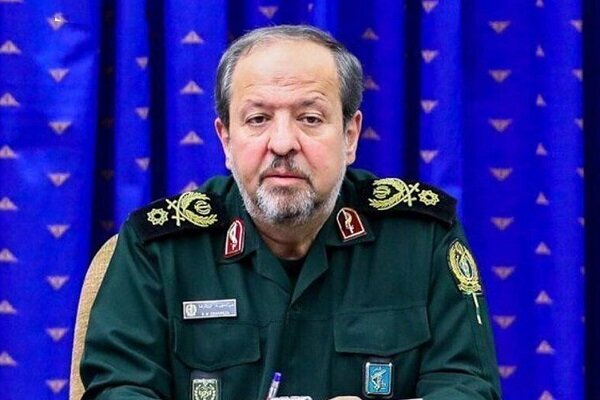
TEHRAN — Iran's acting defense minister has reaffirmed that the country's missile and unmanned aerial vehicle (UAV) capabilities constitute a non-negotiable pillar of national security, stressing that Tehran will continue expanding its indigenous defense programs despite mounting external pressure.
In a statement posted on his X account following a meeting with members of parliament, Brig. Gen. Majid Ebn al-Reza said he had briefed lawmakers on the strategic dimensions, military lessons, and operational outcomes of the recent 40-day US-Israeli war of aggression against the Islamic Republic.
"The Islamic Republic's defense, missile, and drone capabilities are a red line for our national security," the general said. "They are not negotiable—now or in the future."
He emphasized that strengthening Iran's missile arsenal and UAV fleet will remain a strategic priority, adding that future development will continue to rely on domestic expertise, indigenous technology, and the country's expanding defense industry.
The remarks come as Iranian officials have repeatedly ruled out any negotiations over the country's conventional military capabilities, arguing that the missile and drone programs are purely defensive and constitute an indispensable component of Iran's deterrence strategy.
During the recent conflict, Iran relied extensively on its domestically developed missile and drone arsenal in a series of retaliatory operations against Israeli military targets and US military installations across the region. Iranian officials said the operations demonstrated the country's ability to conduct coordinated long-range precision strikes using a combination of ballistic missiles, cruise missiles, and loitering munitions launched from multiple directions.
According to Iranian military assessments, several waves of missile attacks successfully penetrated advanced Israeli and US-supported air defense systems, striking strategic military facilities and infrastructure. Tehran has described the operations as evidence of the growing accuracy, survivability, and operational effectiveness of its indigenous missile force, while maintaining that the campaign significantly altered the regional military balance by proving that heavily defended targets could still be reached with precision.
Iran also claimed responsibility for missile strikes targeting US military bases in the region during the conflict, describing the attacks as a calibrated response to Washington's direct military involvement. Iranian commanders have argued that the operations underscored the strategic reach of the country's missile arsenal and reinforced its deterrence doctrine by demonstrating the capability to hold adversarial military assets at risk across the region.
Since the end of the war, senior Iranian political and military officials have consistently maintained that the experience reinforced the importance of continued investment in indigenous defense technologies. They argue that the performance of Iran's missile and drone forces during the conflict validated decades of domestic military research and development and further strengthened the country's resolve to expand capabilities that they regard as essential to safeguarding national sovereignty and deterring future military aggression.
Leave a Comment