Iran, Tajikistan emphasize trade expansion, removal of obstacles to economic exchanges
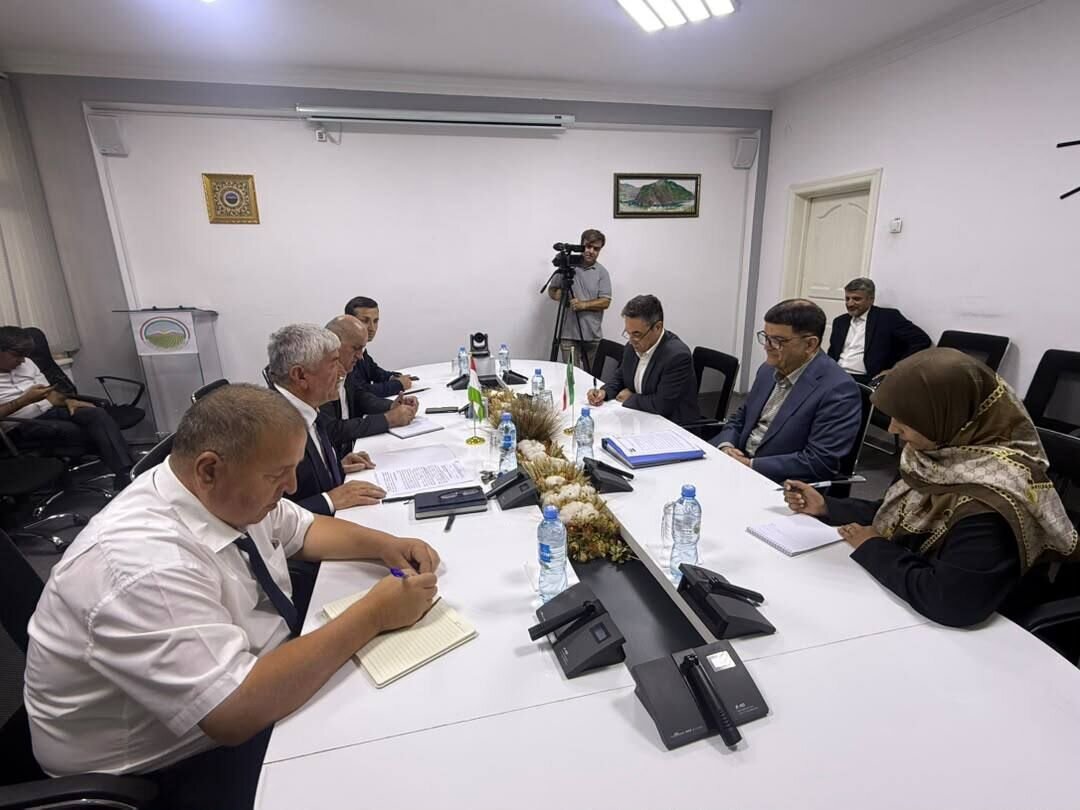
TEHRAN- Iran’ Deputy Minister of Industry, Mining and Trade for Commercial Affairs, in a meeting with the Deputy Minister of Economic Development and Trade of Tajikistan, reviewed the latest status of economic and trade cooperation between the two countries and emphasized the need to accelerate the implementation of agreements, remove obstacles facing those active in the economic sectors, and provide new grounds for developing bilateral trade.
According to IRNA from the Ministry of Industry, Mining and Trade, Mohammad Sadegh Mofatteh, during a trip to Tajikistan and in a meeting with Ahliddin Nuriddinzadeh, Deputy Minister of Economic Development and Trade of Tajikistan, referring to the significant existing capacities for expanding economic relations, stressed the need to accelerate the exchange of tariff information and trade items between the two countries in order to review and finalize the preferential trade agreement.
Mofatteh discussed strengthening financial and banking mechanisms between the two countries and said: “The possibility of using national currencies, barter of goods and services, and creating executive mechanisms for settling trade exchanges should be examined.”
He continued: “Creating a database of economic actors of the two countries and strengthening communication between Tajikistan’s economic bodies and the commercial counselor of the Islamic Republic of Iran is necessary to accelerate the identification and resolution of problems faced by economic actors.”
The Deputy Minister of Industry, Mining and Trade for Commercial Affairs emphasized developing the presence of Iranian companies in the Tajik market and said: “Iranian companies’ access to Tajikistan’s tenders and projects, timely notification of economic opportunities, and providing the ground for the presence of capable Iranian companies in technical and engineering services projects should be taken into consideration.”
He emphasized the development of trade and investment cooperation and said: “Resolving the problems of production units and creating regional value chains is today a special necessity.”
Identifying investment opportunities and joint production, facilitating B2B communications between the private sectors of the two countries, developing trade cooperation, and examining a transparent mechanism for the purchase, transfer, processing, and trade of this product were among the other topics raised in this meeting.
Based on available statistics, the trade volume between Iran and Tajikistan in the first six months of 2026 reached $254.3 million, an increase of 14.8 percent compared to the same period last year; a matter that shows the existing capacity to achieve the goal of increasing bilateral trade volume to one billion dollars by 2030.
Facilitating customs procedures and removing trade obstacles between Iran and Tajikistan
The Deputy Minister of Industry, Mining and Trade for Commercial Affairs said: “In line with developing economic and trade relations between the Islamic Republic of Iran and the Republic of Tajikistan, removing customs obstacles, facilitating the transit of goods, and strengthening logistical and transit cooperation between the two countries are being seriously pursued.”
According to a Thursday report by IRNA from the Ministry of Industry, Mining and Trade, Mohammad Sadegh Mofatteh, during a trip to Tajikistan and in a meeting with Tursunzoda Azim Haydar, First Deputy Head of the Customs Service of the Republic of Tajikistan, stated: “Issues and problems raised by Iranian companies and economic actors in the fields of goods valuation, tariff classification, manner of declaring goods, and customs procedures have been raised in direct interaction with Tajik customs officials and must be reviewed.”
He proposed creating a consultative mechanism between the customs of the two countries to identify goods with disputes in valuation or tariff classification and to try to achieve a unified procedure.
Mofatteh stated: “Direct communication with Tajik customs managers and holding specialized meetings with officials in international affairs, tariff, and export and import areas can provide the basis for continuous follow-up of the issues of economic actors of the two countries and reflection of problems to relevant officials.”
The Deputy Minister of Industry, Mining and Trade for Commercial Affairs added: “Electronic exchange of customs information and documents before the consignment reaches the border is another important issue being pursued, which can help facilitate trade between the two countries by reducing procedure time, exchange costs, and stoppage of goods at the border.”
Referring to the existing capacities between Iran and Tajikistan, he said: “The possibility of more effective use of the two countries’ customs, development of rail and road transport, facilitation of entry and exit of Iranian and Tajik trucks and wagons, and greater use of Iran’s route for the export and transit of Tajik goods is a suitable ground for enhancing economic cooperation between the two countries.”
In this meeting, holding a specialized meeting among Iran Customs, Tajikistan Customs, the commercial counselor, and companies with real cases, in order to directly examine operational issues and achieve executive solutions, was emphasized.
Focus on joint agricultural projects and technology exports between Iran and Tajikistan
The Deputy Minister of Industry, Mining and Trade for Commercial Affairs, in a meeting with the First Deputy Minister of Agriculture of Tajikistan, emphasized the development of economic and trade cooperation in the agricultural sector and said: “Focusing on joint agricultural projects and technology exports between these two countries will lead to strengthening relations.”
Mohammad Sadegh Mofatteh, in a meeting with Nur Ali Mohammadullah, First Deputy Minister of Agriculture of Tajikistan, stated: “Iranian companies have announced readiness to supply agricultural tools and machinery, pesticides, chemical fertilizers, irrigation equipment, livestock medicines and vaccines, and equipment needed for livestock and poultry farming.”
He added: “Proposals have been made to provide the possibility for Iranian producers and joint producers to benefit equally from the offered facilities, which we hope will be given attention.”
The Deputy Minister of Industry, Mining and Trade for Commercial Affairs emphasized reviewing and amending the import tariff for CKD parts in the agricultural sector and said: “In the field of investment and joint production, a specific project for the production and assembly of tractors and agricultural machinery in Tajikistan with the participation of the Tajiran company has been defined, and we have the possibility of developing the export of these products to regional markets.”
He emphasized creating a design for a cotton chain project and said: “We are ready to cooperate from the stage of supplying and purchasing cotton to processing, spinning, weaving, and production of final products with the aim of exporting to third markets, developing greenhouse projects, cold storage, packaging, and processing industries using technical and engineering services.”
Referring to the creation of an export terminal and logistics center for agricultural products, Mofatteh said: “For the aggregation, packaging, processing, and export of Iranian and Tajik products, targeted use of the foreseen customs and tax exemptions is envisaged.”
In continuation of this meeting, in the field of livestock and poultry medicine and health, the possibility of creating a joint production unit for livestock and poultry medicines was emphasized after evaluating the market and receiving feedback from the Ministry of Agriculture and private sector actors of Tajikistan.
Identifying capacities for livestock breeding improvement and technology transfer and establishing communication between Iranian companies and Tajikistan’s livestock breeding center with the aim of transferring technical knowledge, breeding improvement, and developing joint cooperation were among the other topics raised in this meeting.
EF/MA
Leave a Comment