Israel continues demolitions and bombardment in southern Lebanon
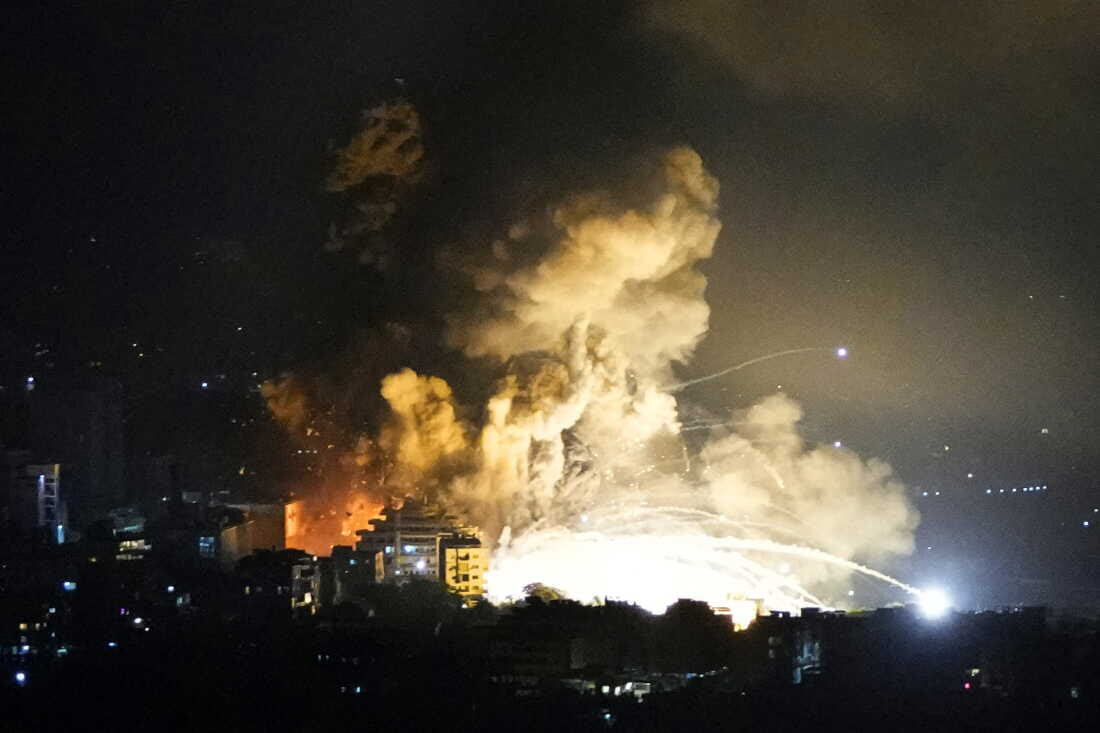
TEHRAN — Israeli engineering units detonated structures in the southern town of Bani Hayyan on Saturday, while artillery crews shelled the outskirts of Wadi al-Hujair, capping another day of heavy military operations across southern Lebanon that lay bare the vacuity of Washington’s diplomatic posturing.
Negotiated under intense American pressure, the June 26 framework agreement promised a structured, phased withdrawal of Israeli forces to restore Lebanese sovereignty. Five months later, that pledge has evaporated into an open-ended occupation.
Tel Aviv continuously redraws the boundaries of its military footprint, backed by the implicit guarantee of U.S. political protection and weapons flows.
On the ground, military operations proceed without regard for U.S.-backed diplomatic texts. Overnight artillery barrages battered the peripheries of Baraachit in the Bint Jbeil district and swept into Wadi Zibqin.
On Friday evening, Israeli shells slammed into al-Arayesh between Haris and Hadatha. Farther west along the coast, heavy machine-gun fire rattled near Mansouri and Bayut al-Sayyad, south of Tyre, accompanied by sustained artillery rounds.
In border communities such as Deir Mimas, Israeli soldiers routinely enforce an unwritten military frontier. On Friday, an armed patrol advanced from Kfar Kila, firing directly near Lebanese civilians attempting to harvest their olive trees. Troops forced the farmers off their land and detained a resident, taking him to an undisclosed location.
Mayor Tania Barnaba noted that more than half of Deir Mimas’s agricultural land is now completely inaccessible.
Lebanese security sources report that Israeli forces enforce an arbitrary, shifting “yellow line,” a mobile security zone whose coordinates move day by day. Local families attempting to collect their seasonal crops face direct gunfire or abduction by border patrols.
This tactical creep reflects the core structural flaw of the U.S.-brokered deal. Washington designed the framework around conditional clauses that allow Prime Minister Benjamin Netanyahu and War Minister Israel Katz to tie any troop withdrawal to their own unilateral assessment of Lebanese security conditions.
By requiring the complete disarmament of Hezbollah prior to a full Israeli pullback, the agreement effectively grants Tel Aviv a perpetual veto over Lebanese state authority.
Since the agreement was signed, the Lebanese Armed Forces have recorded over 7,700 Israeli military violations.
Israeli ground units retain positions 10 kilometers inside Lebanese territory, building paved military access roads that point toward a permanent garrison state rather than a temporary redeployment.
The human cost of this unchecked aggression is staggering. Lebanon’s Health Ministry reported Thursday that Israeli attacks since March 2 have killed 4,390 people and wounded 12,429. That brings the total toll since October 2023 to 8,957 dead and 30,665 injured. Over one million civilians remain displaced.
The physical environment itself has become a target of military destruction. Environment Minister Tamara el-Zein revealed on Friday that Israeli operations have scorched over 16,000 hectares of farmland and ancient forests using incendiary white phosphorus shells and banned munitions.
Human Rights Watch and Harvard Law School’s International Human Rights Clinic have documented at least 23 distinct deployments of airburst white phosphorus over populated areas in southern Lebanon between March and May alone.
El-Zein detailed a report analyzing three massive, controlled demolitions carried out by Israeli forces in Majdal Zoun, the Beaufort Castle area, and Ali al-Taher Hill.
The combined force of these 1,880 tons of explosives generated artificial shockwaves measuring 3.1, 3.8, and 4.2 on the Richter scale, leveling entire ridgelines and fracturing underground aquifers.
Furthermore, more than 2,000 hectares of agricultural soil have been sprayed with glyphosate-based herbicides, systematically destroying the ecological baseline of southern Lebanon’s agrarian economy.
“Who will take responsibility for this destruction, and who will ensure that the Lebanese are not abandoned to cope with its repercussions and the costs of remediation?” el-Zein asked, demanding an independent international mechanism to hold Israel financially and legally accountable.
Leave a Comment