The ‘shock’ the US refuses to learn from
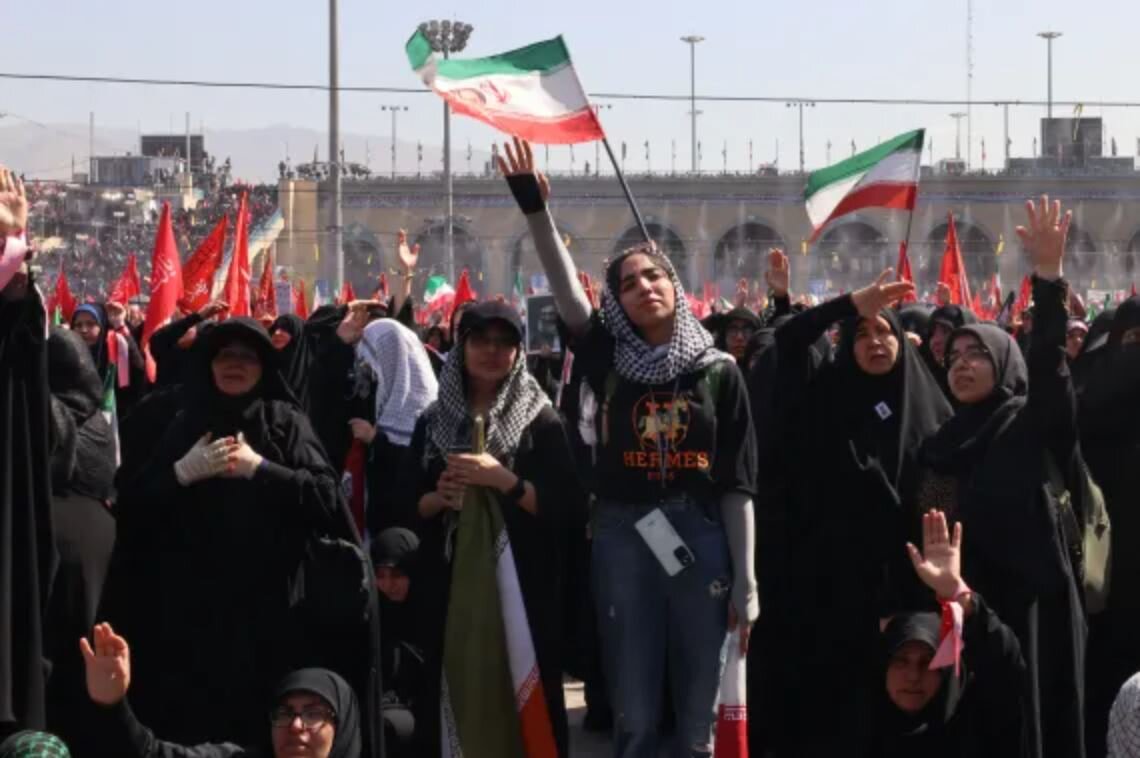
TEHRAN — The images seen around the world this week were clear. Huge crowds of people in black filled the streets of Tehran for miles. They were all heading to the Grand Mosalla for Ayatollah Seyyed Ali Khamenei's funeral. Millions of mourners showed their grief openly and brought the capital to a standstill. This massive display of emotion went against everything the West had expected and is set to continue for the upcoming days in more Iranian and Iraqi cities.
And yet, according to U.S. President Donald Trump, he was "shocked." Shocked, he said, to see such large numbers. But for those who understand Iran – not through the lens of Washington think tanks, but through the reality on the ground – the surprise is not that the crowds came. The surprise is that the West still refuses to learn the lesson it has been taught repeatedly for almost five decades: the Islamic Republic is not fragile, its people are not detached from their Revolution, and the bond between the leadership and the masses cannot be severed by sanctions, assassinations, or war.
For years, the Western analytical establishment has peddled a fantasy. American and European think tanks and various Jerusalem-based security centers have published countless papers predicting that the passing of Ayatollah Khamenei would spell the end of the Islamic Republic. They argued that the system was a "cult of personality," that it rested entirely on one man, and that his passing would trigger an internal implosion, popular uprisings, and the collapse of the state.
As recently as January, these same institutions were briefing policymakers that the Islamic Republic’s "greatest vulnerability" was the biology of its Leader. They assured their governments that economic pressure – years of brutal, unilateral U.S. sanctions –had so exhausted the Iranian people that they would greet the passing of their Leader as an opportunity for revolt. They believed that by assassinating Ayatollah Khamenei in the joint U.S.-Israeli strikes of February 28, they would remove the keystone of the Revolution and watch the arch crumble.
Instead, what transpired was the opposite. The assassination did not weaken the Islamic Republic; it fortified it. The succession was seamless, the institutions held firm, and the public response – the very crowds that now fill Tehran – was not the anger of a people seeking “liberation” from their own government. It was the anger of a people who have been ruthlessly targeted by foreign powers for decades, who have endured economic warfare designed to starve them into submission, and who have responded not with surrender, but with defiance.
What the West fundamentally misunderstands – and what the funeral has made unmistakably clear – is that the Islamic Republic is not a monarchy or a dictatorship in the Western sense. It is a revolutionary system with deep institutional roots. The Leader is not merely a political figure; he is the moral and spiritual anchor of a nation that has defined itself through resistance. The mourning for Ayatollah Khamenei is not a state-mandated performance. It is a genuine outpouring from a populace that recognizes his leadership as the embodiment of their dignity, their sovereignty, and their independence from foreign domination.
Even those Iranians who have, at times, expressed dissatisfaction with economic and social conditions – conditions deliberately worsened by American sanctions – have not turned against the Revolution. What the West misread as "opposition" was always, at its core, frustration with hardship, not rejection of the system. And the assassination of the Leader has channelled that frustration into something far more dangerous for the West: unity. It has reminded every Iranian, whether they voted for reformists or conservatives or not voted at all, that the true enemy is not in Tehran—it is in Washington and Tel Aviv.
The Western media, in their usual fashion, have tried to spin the funeral as a display of "state-imposed" emotion. But the sheer scale – the presence of dignitaries from dozens of nations despite U.S. pressure and the millions walking for hours under the sun –cannot be manufactured. This is the organic expression of a nation that has been pushed to the brink and has chosen to stand together. The Islamic Republic, far from wobbling, has emerged from this crisis stronger than before. The government has consolidated its authority, the military has been embraced as protectors of the homeland, and the people have rallied around the flag of their Revolution with renewed conviction.
There is a bitter irony here. The U.S. and Israel launched this war believing they could spark a popular uprising. They invested billions in sanctions, military strikes, and psychological operations, all predicated on the idea that Iranians would welcome their "liberation." Instead, they have achieved the exact opposite. They have united a nation that was already weary of foreign intervention, and they have handed the Islamic Republic a mandate of resistance that will last for generations.
The funeral of Ayatollah Khamenei is not a moment of weakness. It is a moment of validation. It proves that the Revolution is not about a single man, but about an idea—an idea that has survived the Shah, the Iraq war, decades of sanctions, and now, direct assassination. The West can kill our leaders, but they cannot kill our Revolution. They can impose economic hardship, but they cannot buy our loyalty. They can express their "shock" at our unity, but they will never understand it, because they refuse to see Iran as it truly is.
So let President Trump be shocked. Let the think tanks recalibrate their failed models. Let the media struggle to explain what they cannot comprehend. The streets of Tehran have spoken, and their message is clear: the Islamic Republic is here to stay, more resilient, more unified, and more determined than ever. The West's war against Iran has not weakened us. It has made us unbreakable.
Leave a Comment