Growth of Iran’s peaceful nuclear program driven by martyred Leader’s vision, AEOI chief says
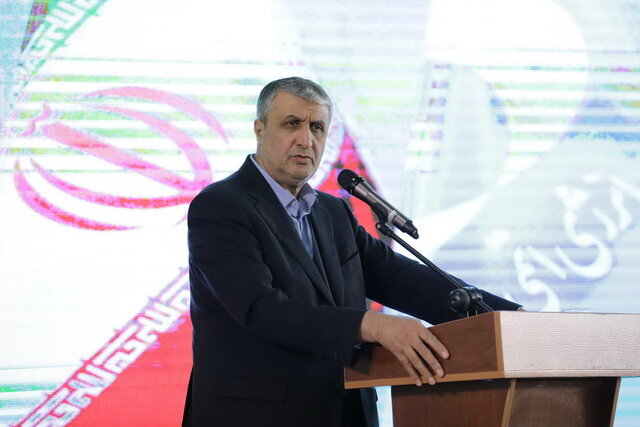
TEHRAN — Iran’s peaceful nuclear achievements were made possible through the strategic vision, steadfast guidance, and unwavering support of the late Leader of the Islamic Revolution, Ayatollah Seyyed Ali Khamenei, according to Mohammad Eslami, Vice President and head of the Atomic Energy Organization of Iran (AEOI).
Speaking during a TV program, Eslami paid tribute to the martyred Leader, describing him as the principal architect behind the country’s scientific and technological progress, particularly in nuclear energy. He said Ayatollah Khamenei’s long-term guidance enabled Iran’s nuclear industry to pursue its objectives through an indigenous, knowledge-based approach despite years of sanctions and external pressure.
Eslami said the late Leader’s emphasis on self-reliance laid the institutional foundations for the development of Iran’s peaceful nuclear program, allowing the country to overcome technological restrictions imposed by foreign powers.
Reflecting on the challenges faced by the sector, Eslami said Iran’s nuclear industry had continued its advancement despite sustained efforts by adversaries to obstruct its progress. Those efforts, he said, ranged from sanctions and restrictions on international cooperation to acts of industrial sabotage, the assassination of Iranian nuclear scientists, and military threats aimed at denying Iran access to advanced nuclear technology.
According to Eslami, these pressures failed to halt the country’s scientific development because of domestic expertise and public support. He praised 'the Iranian nation’s resilience and awareness,' saying public unity had strengthened the country’s standing on the international stage.
The AEOI chief highlighted nuclear energy as a central pillar of Iran’s long-term energy strategy, noting that the country has prioritized the expansion of clean and sustainable electricity generation in line with global trends. He recalled that although nuclear power projects had initially relied on foreign studies before the 1979 Islamic Revolution, the late Leader later charted an independent course for the industry.
Eslami said Ayatollah Khamenei first called in 2007 for Iran to develop the capacity to generate 20,000 megawatts of nuclear electricity, describing the target as a strategic national objective that continues to guide the country’s energy planning.
Addressing ongoing infrastructure projects, he said the Bushehr Nuclear Power Plant has achieved record levels of electricity generation while significantly contributing to the national grid. Plans are also underway to expand nuclear power generation along Iran’s southern coastline and in the provinces of Khuzestan and Golestan, with additional projects, including one in Hormozgan Province, aimed at supporting the long-term goal of increasing nuclear power capacity.
Eslami stated that the electricity produced by the Bushehr plant has saved approximately 131 million barrels of oil. He also noted that the facility has generated economic returns estimated to be about two and a half times its original investment cost over more than a decade of operation.
The government is seeking to encourage greater public participation in investment across the nuclear energy sector, he said adding that the new nuclear power plants will be developed gradually under Iran’s 20-year strategic plan to meet growing industrial and public demand for electricity.
Beyond power generation, Eslami underscored the expanding role of nuclear technology in healthcare, describing radiopharmaceutical production as one of the country’s most significant scientific achievements.
He said the AEOI currently produces around 80 types of radiopharmaceuticals, which are supplied to hospitals and nuclear medicine centers nationwide. Approximately 1.5 million patients benefit from these products each year, he said, while Iran has also expanded exports of domestically manufactured radiopharmaceuticals.
According to Eslami, despite years of sanctions and technological restrictions, many of Iran’s domestically developed radiopharmaceuticals have progressed beyond research and clinical testing and are now being produced for commercial and medical use.
Leave a Comment