Ansarallah consolidates Red Sea control as Trump rejects MBS’ desperate appeals
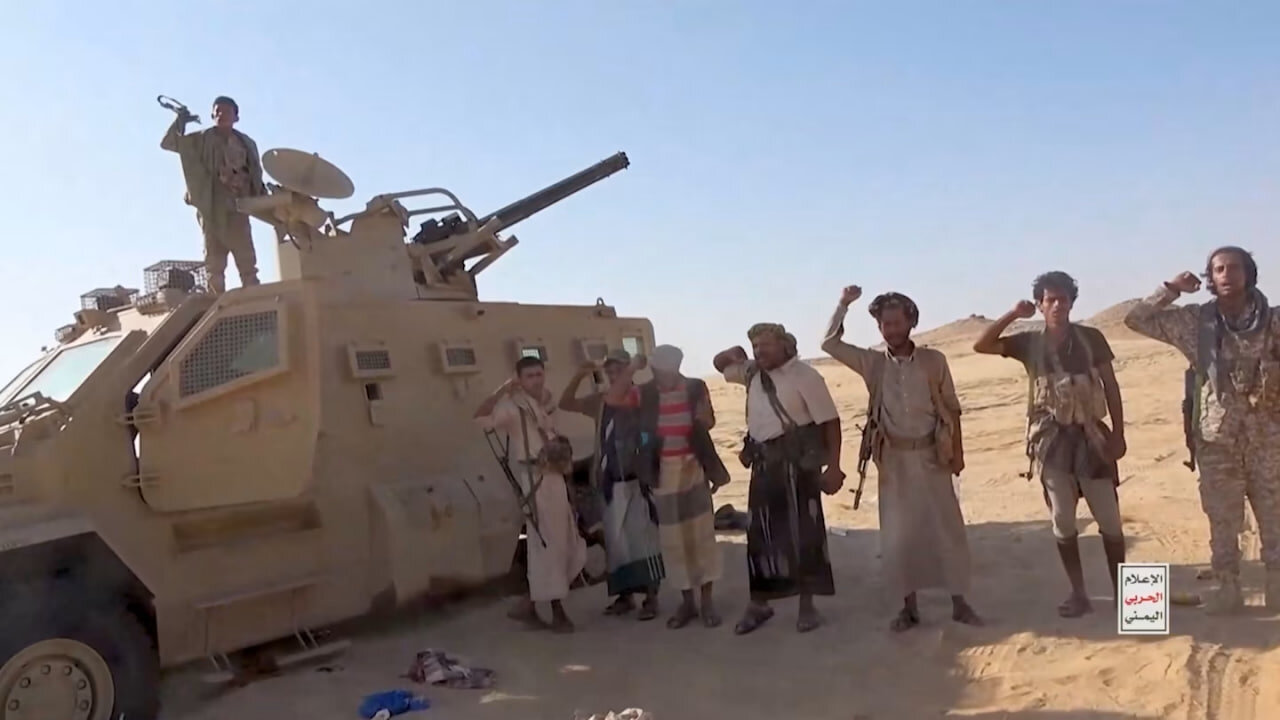
TEHRAN — The Saudi campaign of aggression in Yemen is unraveling on the western coast. In a lightning offensive that swept through the coastal plain, Yemeni forces under Ansarallah command have captured the port city of Mokha, Mayyun Island, and strategic highlands in Lahij province.
The proxy formations Riyadh spent a decade financing have abandoned their positions. Weapons depots and observation posts fell intact. Sanaa now holds the heights overlooking the Bab al-Mandab Strait.
The collapse removes the last significant Saudi buffer zone on the Red Sea. Retreating mercenaries abandoned their posts and shed their uniforms as the defensive lines broke.
According to recent local reports, Ansarallah fighters are pressing into the Kahboub mountain range. Securing these heights will permanently sever supply routes to Saudi-backed factions in the south and expose the remaining coalition strongholds.
Air strikes and deep retaliation
Riyadh has answered the ground defeat with a massive air campaign. Saudi warplanes carried out more than 760 airstrikes over recent weeks.
Using F-15 and Typhoon jets launched from Khamis Mushait and Taif, the bombardment hit telecommunications infrastructure and civilian neighborhoods in Taiz, al-Jawf, and Marib.
Sanaa established an immediate cost for the escalation. The Yemeni Armed Forces launched heavy retaliatory operations using ballistic missiles and drones against sensitive sites in Riyadh and Saudi Aramco facilities in Yanbu.
Videos showed fires burning near King Khalid International Airport.
Saudi authorities attempted to cover their vulnerability by falsely claiming Yemen targeted Mecca. Sanaa categorically dismissed the accusation as a fabrication meant to generate religious sympathy and distract from Saudi war crimes.
The economic bleeding in Saudi Arabia is accelerating. The Financial Times recently reported Saudi crude production dropped 23 percent to 6.2 million barrels per day in August.
Aramco exports have plummeted. Dozens of Saudi tankers have been rerouted away from Bab al-Mandab. Riyadh is reportedly begging countries it has long considered allies for interceptor missiles after depleting its stockpiles.
Washington leaves Riyadh stranded
Panic in Riyadh has translated into urgent appeals to the United States.
The New York Times (NYT) and Axios reported that Crown Prince Mohammed bin Salman called President Donald Trump multiple times, begging for American airstrikes against advancing Yemeni forces.
Trump ordered the Pentagon to prepare target lists. Aircraft were loaded with munitions, then he reversed the order, according to the NYT.
Trump’s inner circle and American commanders reportedly opposed opening a new front. The U.S. military is already stretched thin by its ongoing war with Iran.
The NYT report also claimed that the Trump administration recognized another brutal reality: the U.S. military’s bombing campaigns in 2025 failed to break Ansarallah, and there is no reason to assume it will succeed this time.
Yemeni official Mohamed al-Bukhaiti told the Associated Press that Sanaa conveyed to Washington that it would not target international shipping, confining its naval blockade strictly to the Saudi enemy for now.
Trump has backed down, at least for now, leaving Riyadh to fight its own war.
Additionally, Reuters reported that Trump offered no military pledge during a recent call with Saudi-backed figure Rashad al-Alimi.
‘We can reach anywhere Saudi officials might be taking shelter’
In a speech on Thursday, Ansarallah leader Abdulmalek Badreddin al-Houthi excoriated the complicity of the governments of Arab and Islamic countries in the Saudi-led aggression.
“The Arab and Islamic stance on the Saudi aggression on Yemen has been one of abandonment, except for the axis of jihad and resistance and some free people of the world,” he said.
He revealed that “delegations from the Saudi and British enemies” were traveling to Djibouti to tighten procedures and increase the suffering of the Yemeni people through economic strangulation.
He challenged the world’s “weeping entities” to accept the same restrictions Saudi Arabia has placed on Yemen’s imports, currency, and natural resources for over eleven years.
“In the de-escalation phase, the Saudi regime did not seriously move toward peace, but made it an opportunity to tighten its arbitrary measures and build takfiri military formations,” al-Houthi said.
Additionally, Yemen’s military leadership warned Riyadh that further aggression will be met with even more devastating retaliation.
In a joint message marking the twelfth anniversary of the September 21 Revolution, Defense Minister Major General Mohammed Nasser al-Atifi and Chief of Staff Major General Youssef Hassan al-Madani stated that “missiles and drones can strike any location deep inside Saudi territory, devastate the kingdom’s economy, and can reach anywhere Saudi officials might be taking shelter.”
The message emphasized that “the slightest folly you commit will come at a heavy price. Our armed forces have introduced effective measures to establish a new equation of deterrence.”
Leave a Comment