Iran’s traditional water wisdom could help address modern challenges: heritage official
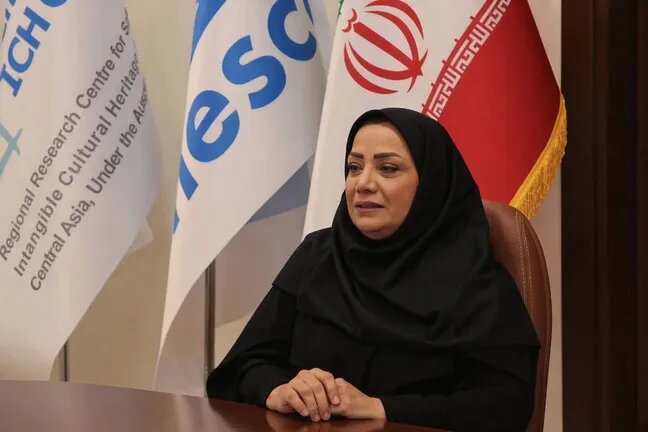
TEHRAN – Traditional Iranian knowledge of water management, from historic water-sharing systems to rainwater harvesting and community-maintained reservoirs, could offer valuable lessons for addressing contemporary water challenges, Atousa Momeni, head of the Tehran-based regional research center for safeguarding intangible cultural heritage in West and Central Asia, has said.
Speaking in an interview with the Tehran Times ahead of the commemoration of the International Day of the Intangible Cultural Heritage, Momeni emphasized that safeguarding living heritage requires more than registering cultural practices on national or international lists. It depends on the active participation of local communities, the transmission of traditional knowledge to younger generations and the preservation of the social and environmental conditions that allow such practices to survive.
The Tehran center has chosen “Living Heritage and Water” as the theme of this year's commemoration, scheduled for Monday, November 9, 2026, and will present its “Living Heritage and Water Award” to three selected initiatives from Semnan, Hormozgan and Fars provinces.
The occasion is intended to highlight how traditional knowledge and community-based practices can complement contemporary approaches to water management, particularly in regions facing drought, climate change and growing pressure on water resources.
“Water is one of the clearest expressions of the relationship between historical knowledge, living culture and the future of our land,” Momeni said.
She noted that Iran's heritage of water management extends well beyond its celebrated qanats, reservoirs and historic hydraulic structures. Over centuries, communities developed extensive knowledge of identifying, collecting, storing, distributing and responsibly using water in arid and semi-arid environments.
The annual commemoration, she said, should not be viewed as an isolated ceremonial event. Identifying, documenting and introducing successful experiences in safeguarding traditional water-related knowledge is among the programs approved by the center's governing council.
The initiative also seeks to encourage research, exchange of expertise and regional cooperation among countries in West and Central Asia, where water scarcity, climate change and humanitarian challenges are increasingly shared concerns.
“An award is not the end of the process for us; it is the beginning of a broader effort to introduce valuable knowledge, strengthen community participation and create opportunities for transferring successful experiences,” she said.
Explaining a selection of three selected initiatives, Momeni said each illustrates a different dimension of the relationship between intangible heritage and contemporary life.
In Semnan, the selected experience concerns a traditional system of water management and distribution. Its significance lies not only in physical infrastructure but also in the customary rules governing water rights, shared responsibilities and cooperation among users.
“The heritage of water in Semnan is not merely a story of water engineering; it is also a story of social organization and the wisdom of living in a water-scarce environment,” she said.
On Qeshm Island in Hormozgan province, the traditional practice known as “Kheyrab” demonstrates how rainwater harvesting in historic reservoirs can be connected with community participation and modern technological capacities. Momeni said the experience could offer useful insights for coastal and island communities, where freshwater supplies are particularly vulnerable.
The third initiative, in Karmostaj, a village in Fars province's Larestan region, focuses on the restoration of traditional reservoirs and water-storage facilities through the involvement of local residents and charitable contributors.
Together, the three projects demonstrate how indigenous knowledge, collective responsibility and cultural attachment can help sustain traditional practices while addressing present-day needs.
Momeni stressed that local communities must remain at the center of safeguarding efforts, in line with the 2003 UNESCO Convention for the Safeguarding of the Intangible Cultural Heritage, which recognizes their central role in identifying and maintaining their heritage.
She said the Tehran ceremony would provide an opportunity for representatives of the selected initiatives to explain their work, ensuring that the discussion is not limited to officials and academic specialists.
“Water heritage should not be narrated solely by experts and administrators,” she said, pointing to traditional water managers, farmers, craftspeople, reservoir builders and those who maintain customary water-sharing systems as the actual holders of this knowledge.
“Living heritage cannot be safeguarded for people alone; it must be safeguarded with people and through their participation.”
Turning to a broader challenge in heritage protection, Momeni said the number of registered elements should not be treated as the principal measure of success.
She underlined that traditional knowledge may disappear even after being included on a national or international heritage list if its practitioners lose opportunities to pass it on, face economic difficulties or see the social and environmental settings supporting it gradually disappear.
She said the more meaningful questions were whether knowledge holders could continue transmitting their expertise, whether younger generations had the motivation and opportunity to learn, and whether local communities were involved in decisions affecting their heritage.
Restoring a historic reservoir, for example, would not be enough if the traditional skills required to build and maintain it were no longer passed down. Similarly, documenting a customary water-sharing system would preserve only a historical record if the experience of those who operate it were overlooked.
“Registration is the beginning of recognition; safeguarding is a commitment to the continued life of heritage,” she said.
Momeni described the central message of this year's commemoration in a simple phrase: “The future of water depends on the memory of water.”
She cautioned, however, against assuming that solutions to today's complex water problems could be found simply by returning to the past. Rather, historical experience should be considered alongside contemporary science and technology.
For younger generations, she added, learning traditional water-management practices is about more than acquiring old technical skills. It also means understanding fairness, shared responsibility, moderation and respect for the rights of others and future generations.
“These are the values we hope to communicate to society through this year's commemoration,” she said.
AM
Leave a Comment