Total:193
-
 Yesterday 21:32
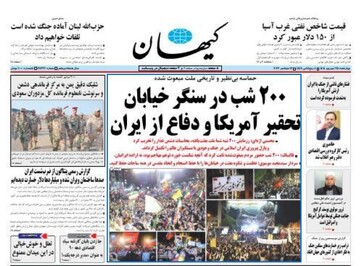
A confession that shook the United States
Kayhan, in a note, addressed the first official Pentagon report acknowledging the scale of damage the United States suffered in the war against Iran. The US has incurred tens of billions of dollars in losses and has lost hundreds of military buildings and installations.
-
 2026-09-15 20:57
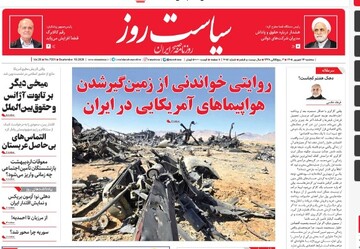
BRICS is trying to change the rules of the game
Siasat-e-Rooz examined the significance of the Delhi Declaration at the BRICS summit for Iran. The declaration matters for Iran in several ways. First, BRICS expressed concern over the rise of unilateral tariff and non‑tariff measures that violate World Trade Organization rules.
-
 2026-09-14 23:52
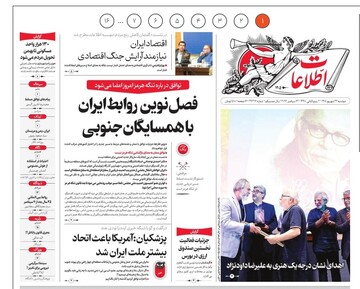
Transformations in Yemen: An earthquake in regional calculations
Ettelaat, in an analytical piece, examined the recent developments in Yemen. It wrote: What has been unfolding in Yemen in recent days goes far beyond a simple military shift between Ansarullah and Saudi‑backed forces.
-
 2026-09-13 20:56
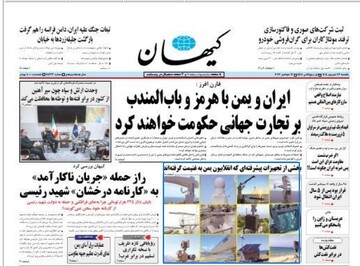
The new strategic power of the Resistance
Kayhan, in a note discussing recent developments in the Middle East, argues that a new strategic power structure has emerged within the Resistance axis. This new power is the result of several interconnected factors: Iran’s ability to overcome and outmaneuver the United States, Israel, and their regional allies, Yemen’s offensive military capabilities, and the steadfastness of Lebanon and Palestine.
-
 2026-09-12 20:51
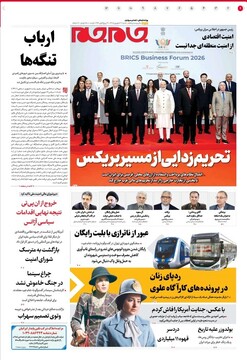
Iran’s opportunity in BRICS
Jam-e-Jam analyzed the multifaceted importance of BRICS for Iran. It noted that establishing an independent financial system within BRICS is not feasible in the short term, and even among member states there are disagreements about the pace and form of “de‑dollarization.” India has also emphasized that it is not currently seeking a BRICS common currency, focusing instead on cross‑border payments and the use of national currencies.
-
 2026-09-11 20:16
Americans are seeking a pretext for another strike on Iran’s nuclear facilities
In an interview with Hassan Hanizadeh, an international affairs expert, Shargh referred to the anti‑Iran resolution passed by the Board of Governors of the International Atomic Energy Agency (IAEA). Hanizadeh said that this resolution was adopted under pressure from the United States and certain European countries to increase pressure on Iran and isolate it, and that its political dimension outweighs its technical aspects.
-
 2026-09-09 20:21
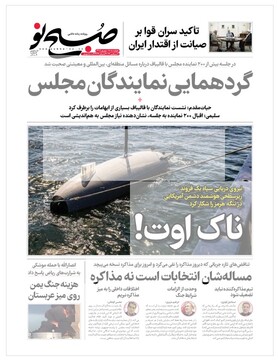
From war to resolution
Sobh‑e‑No analyzed Trump’s “invalid policy,” arguing that it stems from Washington’s inability to confront Iran’s power. After months of conflict and failure to counter Iran, the United States now intends to use another pressure lever — referring Iran’s case to the UN Security Council — in hopes of forcing Iran to yield.
-
 2026-09-08 21:44
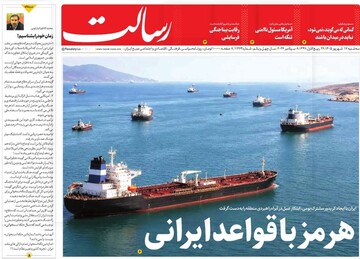
Resalat: The US fleet under Iranian ballistic fire
Resalat analyzed the complex IRGC operation targeting two American vessels. The IRGC stated the two US vessels, after being struck and sustaining damage, quickly left the engagement zone out of deep fear of a second wave of missile attacks and were forced into a tactical retreat.
-
 2026-09-07 20:53
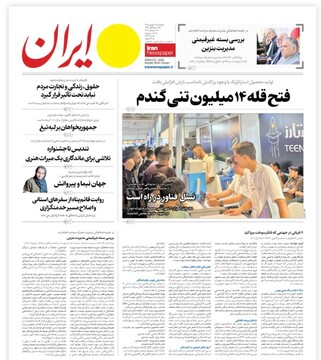
The Strait of Hormuz as the US president’s political thermometer
The Iran newspaper analyzed the management of the Strait of Hormuz and the control of tensions in the region: The current situation in the Strait of Hormuz must be understood within the conceptual framework of “erosive peace.
-
 2026-09-06 20:59
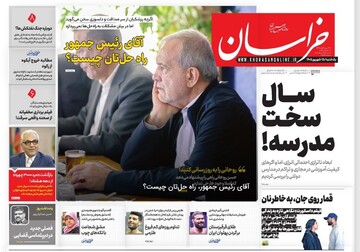
A new chapter in judicial diplomacy
Khorasan examined the Judiciary chief’s trip to New Delhi and his participation in the BRICS judicial summit. According to Khorasan, today’s world is moving through a historic transition and entering a new phase in the global configuration of power, economics, politics, and international law.
-
 2026-09-05 20:36
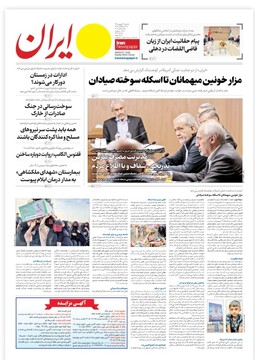
The only viable path — America must return to the agreement
The Iran newspaper, in an interview with Mashallah Shakeri, former ambassador of the Islamic Republic of Iran to Pakistan, explored why Pakistan is once again attempting to mediate between Iran and the United States.
-
 2026-09-04 20:18
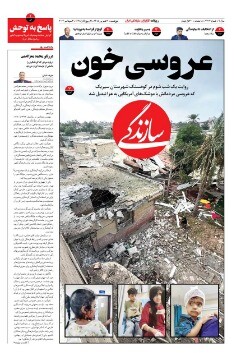
Why did Beijing reject the G20 statement?
Sazandegi assessed China’s refusal to join the G20 statement. The meeting was supposed to focus mainly on economic issues, but disagreements over the Strait of Hormuz once again exposed geopolitical rifts among major powers. The G20 countries emphasized the need for safe and free navigation in the Strait of Hormuz, but China declined to endorse the position.
-
 2026-09-02 20:58
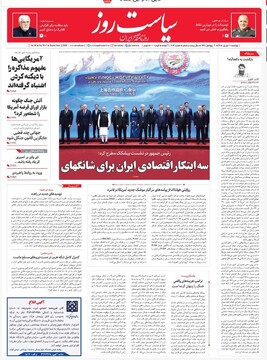
America’s humanitarian masks
Siasat‑e‑Rooz dedicates its editorial to the US exploitation of Venezuela’s oil, arguing that Trump’s approach is partly rooted in Washington’s failure in the Strait of Hormuz and partly a continuation of the same “promise‑based” policy whose expiration date has long passed.
-
 2026-09-01 21:13
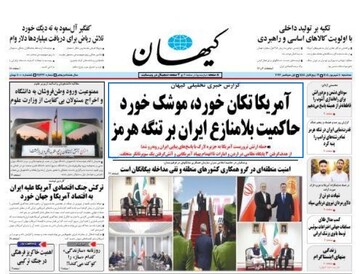
The agreement emboldens the Zionists
Kayhan, in an article, criticized the reformist camp’s view of the Islamabad memorandum. The paper wrote: Reformist claimants portray a return to the memorandum as a guarantee of peace, yet an Israeli minister has threatened Iran, saying that an agreement with the United States will not restrain Israel’s determination.
-
 2026-08-31 21:16
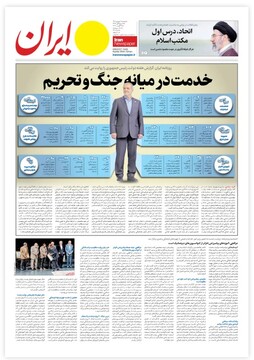
SCO summit: Iran’s opportunity to contain unilateralism
The Iran newspaper, in an analytical article, refers to Masoud Pezeshkian’s trip to Bishkek to attend the Shanghai Cooperation Organization summit. Given the ongoing Iran–US war and its consequences for regional and global order, this visit should not be viewed as a routine diplomatic appearance.
-
 2026-08-30 21:12
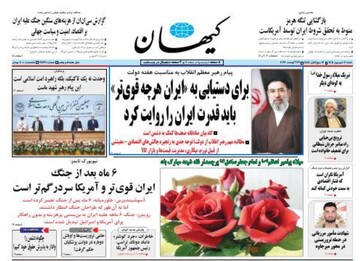
Iran does not fear Trump’s threats
Kayhan, in an article, pointed to Iran’s strength in the face of the United States threats. If we review Trump’s statements over the past six months, we repeatedly encounter phrases such as “Iranians are tough.” All of these remarks were made at moments when he had previously threatened Iran, Iran ignored the threat, and the United States was ultimately forced to back down.
-
 2026-08-26 21:12
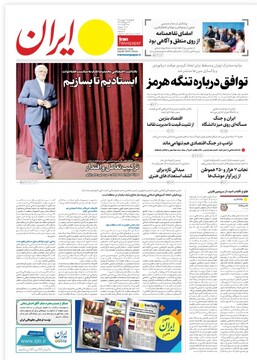
The US cannot remove Iran’s control over the Strait of Hormu
The Iran Newspaper, in an analysis, highlighted Iran’s ability to control the Strait of Hormuz. It wrote that when Trump threatens Iran by saying he will turn the Strait of Hormuz into American territory, his administration is essentially seeking to restore the strait as a free, international passageway for global oil shipments.
-
 2026-08-24 20:46
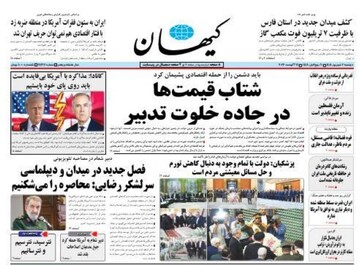
The oil market now ignores Trump’s messages
Kayhan, in an article, examined Trump’s desperation in the current situation. Trump’s frustration and anger come at a time when Axios acknowledged that changes in oil prices in response to Trump’s social‑media posts about the Iran war have steadily declined over time.
-
 2026-08-23 20:48
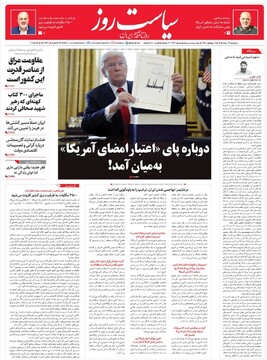
UAE remains lost in its delusions
Siasat-e-Rooz devoted its editorial to the UAE’s regional behavior. According to the piece, Abu Dhabi’s actions show that the country still clings to the illusion that American and Israeli backing will guarantee its political survival and secure a role for it in the region.
-
 2026-08-22 21:09
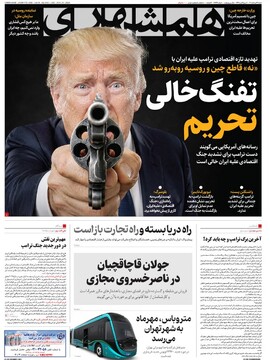
America cannot turn a failed policy into a winning card
In the latest act of the failed “maximum pressure” policy, Donald Trump has now spoken of launching the most severe economic operation in history against Iran, aiming to open a new front against Iran’s economy. Washington is attempting to isolate Iran economically by threatening countries, banks, and companies that cooperate with Tehran.
-
 2026-08-21 19:37
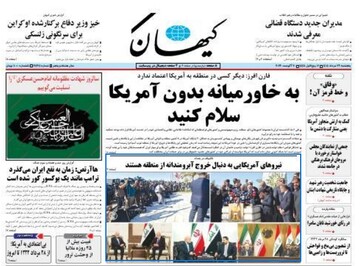
Kayhan: The time has come for America to leave West Asia
Kayhan, in an article, points to the desperation of the United States in its war with Iran. Six months have passed since the US and Israel launched their war against Iran, but Iran fought not only the United States but also NATO members, regional states, and Israel, and forced them all to their knees through steadfast resistance.
-
 2026-08-15 21:45
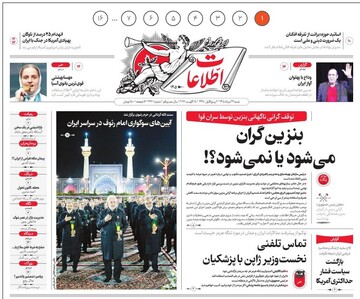
No fixed strategic objective
Ettelaat examines the reasons behind Donald Trump’s contradictory behavior. The paper notes that Trump has repeatedly claimed victory in unjustified aggression, even asserting that the Strait of Hormuz is open, while Iran continues to exercise strategic control over this vital waterway.
-
 2026-08-14 21:05
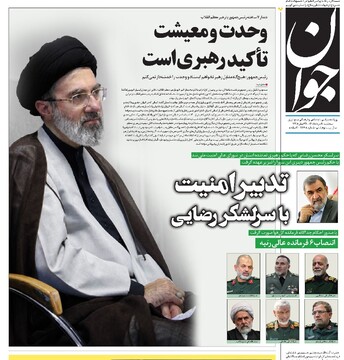
Meaningful message to Washington
Javan analyzed the purpose behind the Mecca Agreement signed by Saudi Arabia, Pakistan, and Turkey. The Mecca Agreement is undoubtedly one of the most significant security developments in the Middle East in recent years.
-
 2026-08-10 22:19
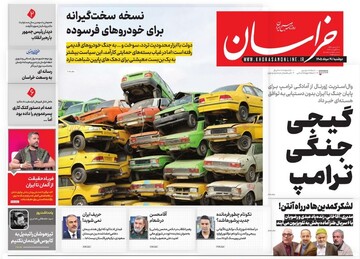
The document of America’s defeat
Khorasan analyzed the United States’ failure regarding Iran. According to Khorasan, the dispute over the Islamabad understanding is less about its clauses and more about differing definitions of victory and defeat. Critics call it a weak agreement, while supporters consider it a significant achievement.
-
 2026-08-09 20:47
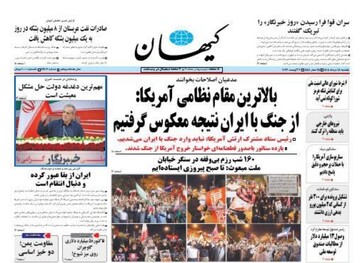
A new order in West Asia
Kayhan, in a commentary, has pointed out when the war will end. The reality is that the Islamic Republic of Iran has shown it can close the Strait of Hormuz in a way that even the world's strongest army has been unable to reopen this vital waterway to ships.
-
 2026-08-08 21:39
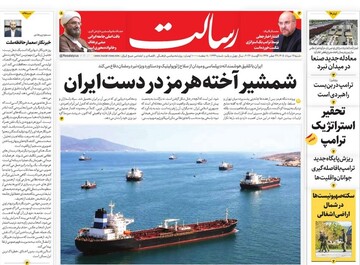
Neutralizing sanctions through structural reform
Javan, in an article evaluating the path toward economic progress and improvement, argues that for years a significant portion of Iran’s economic policymaking has been centered on foreign sanctions and strategies to counter them.
-
 2026-08-07 21:02
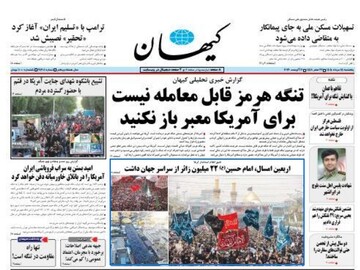
Is there any hope for an agreement?
Hamshahri examined President Pezeshkian’s recent remarks under current conditions. Pezeshkian says that we must try to ensure the enemy remains committed to what it has signed.
-
 2026-08-02 20:44
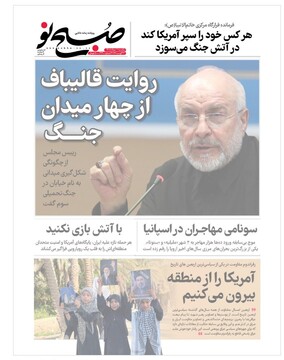
Neither threat nor attack will force Iran to retreat or surrender
Sobh-e-No presented its view on America’s need to accept Iran’s conditions and exit the current crisis. Iran’s position regarding the Strait of Hormuz crisis is clear and non-negotiable: “Accepting Iran’s sovereignty over the Strait is the condition for a ceasefire and any kind of agreement.” This condition is not a maximalist demand but arises from on-the-ground realities and the provisions of the Islamabad memorandum, which had previously been agreed upon through Pakistan’s mediation.
-
 2026-08-01 21:23
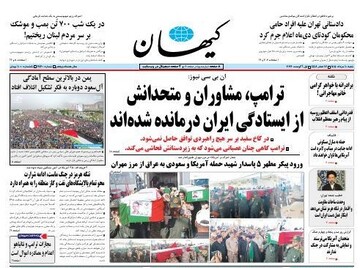
America was caught off guard
Kayhan analyzed Iran’s surprise attack on Jordan. According to Kayhan, Iran’s pre‑emptive strike on US military logistics in Jordan completely surprised Washington and Tel Aviv’s think tanks, forcing Trump to admit that “Iran’s attack was unexpected.” Kayhan describes the strike as a smart blow that once again showcased Iran’s superior position and battlefield initiative to the world.
-
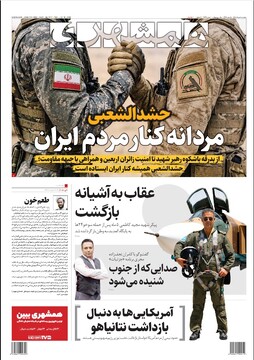 2026-07-31 21:27
Oil prices no longer react to war rhetoric, but to real supply cuts
Hamshahri analyzed the current oil market and wrote: The oil market, during the recent US–Iran conflict, once again revealed an important reality: war itself does not determine oil prices.